
Compare long-base and telescopic booms
When choosing the right excavator boom for your project, it's crucial to understand the difference between extended and telescopic booms. Both boom types offer unique advantages, but each is effective in different applications. Long-reach boomsThey are designed for increased reach and depth, making them ideal for deep excavation and working over large areas. Telescopic booms, meanwhile, provide adjustable reach and precision, ideal for tasks requiring flexibility in tight spaces.
Coverage and suitability
Long reach booms: ideal for deep excavation projects
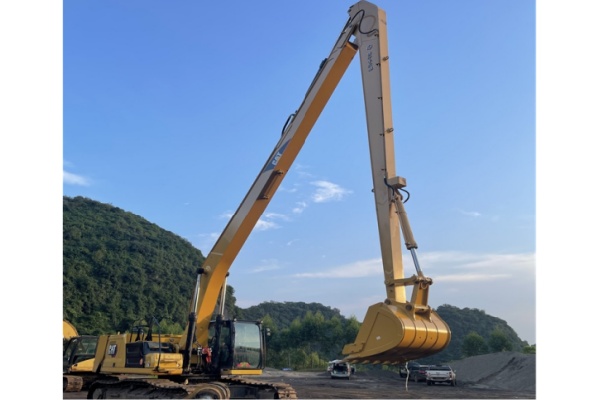
Reach booms are the ideal choice for projects that require long reach and depth. These excavator attachments are specifically designed to enhance the machine's capabilities, allowing operators to work in areas that would otherwise be inaccessible. Extended booms are truly indispensable for deep excavations, for example, when constructing the foundations of high-rise buildings or drainage systems.
outstretched armlong reach arrowAllows operators to work at depths unattainable with standard booms. The extended reach is especially valuable in situations where the excavator needs to maintain a safe distance from unstable ground or when working on steep slopes. For example, in mining or quarrying, long reach booms allow operators to retrieve material from high sides without compromising safety.
What's more, long booms are great for pond or wetland projects. The extended reach allows operators to dredge rivers, clear shorelines or perform bridge maintenance without the need for specialized equipment or temporary structures. This versatility makes long booms an invaluable tool in environmental restoration and infrastructure maintenance projects.
Telescopic booms: ideal for precise, adjustable reach
Telescopic booms have a number of advantages, primarily due to flexibility and accuracy. This innovative attachment features a boom that can extend and retract, giving the operator adjustable reach. This adjustability makes telescoping booms especially useful on projects that require working at different distances or heights without moving the excavator.
In urban construction projects where space is often limited, telescopic booms have proven themselves to be excellent. They allow operators to easily maneuver into tight spaces between buildings or around existing structures. On-the-fly boom length adjustment allows precise positioning of the bucket or attachment, improving accuracy in tasks such as laying pipes or positioning structural components.
Telescopic booms are also great for jobs that require frequent changes to the working radius. For example, in demolition, operators can easily switch between precise work at close range and work at higher levels of the structure. This adaptability greatly reduces the need to use multiple machines or frequently change positions, increasing overall project efficiency.
Choosing the Right Boom for Your Excavator
Selecting the appropriate type of boom depends on a careful assessment of your project requirements. Consider factors such as required maximum reach, variety of tasks performed, and operating conditions. For projects that primarily involve deep digging or working over large areas, a long reach boom is likely the best choice. However, if your job often requires adjustable reach and precision in tight spaces, a telescopic boom may be a better option.
It is also important to consider the relationship between reach and load capacity. Long reach booms generally provide greater reach but may have a lower lift capacity when fully extended. Telescopic booms, despite having adjustable reach, generally maintain better lifting capacity throughout the entire range of motion. Assess the specific needs of your project to determine which feature is most important to your operations.
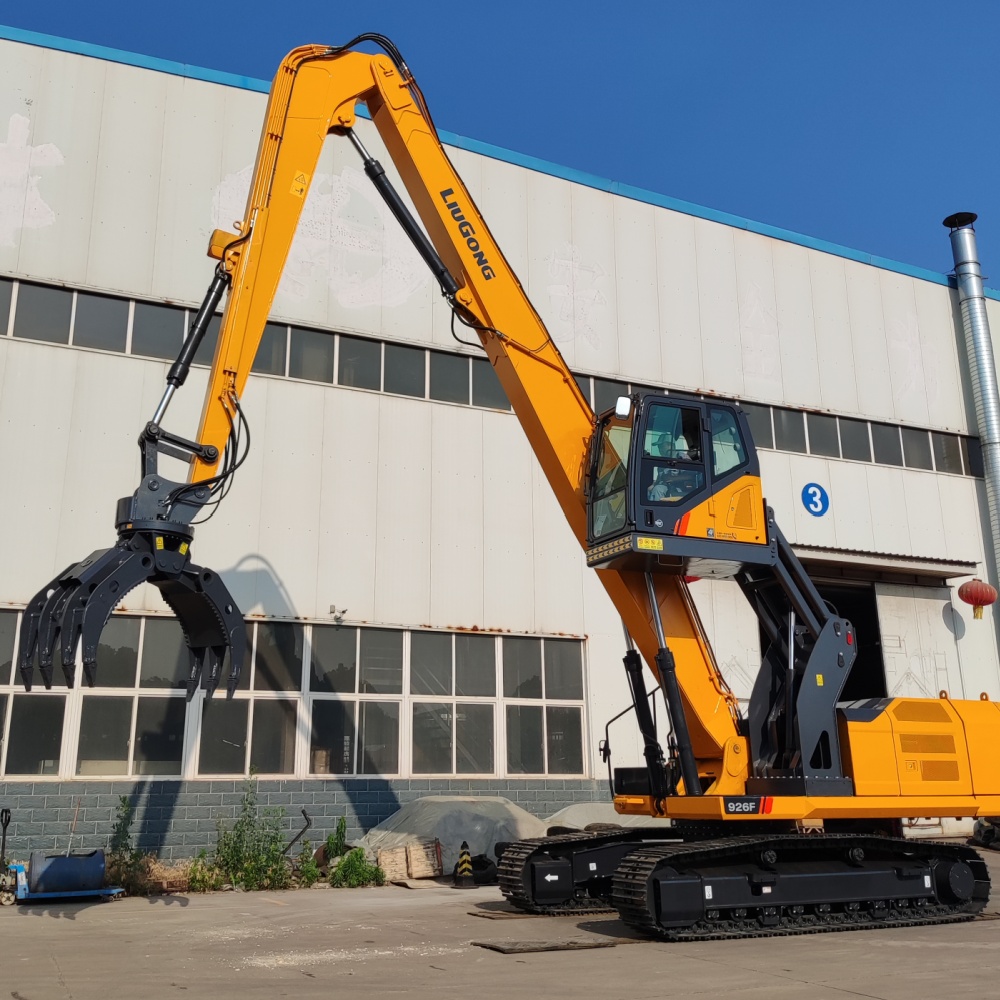
Working speed
Long Booms: Faster for Large Scale Excavations
For large-scale excavation work, long reach booms provide superior speed and efficiency. Their extended design allows operators to cover large areas without frequently repositioning the excavator, saving significant time. This advantage is especially noticeable when carrying out projects such as land reclamation, quarrying or large-scale landscaping.
Consistent, long reach booms allow operators to maintain a consistent work rhythm, reducing the need for frequent adjustments. This continuity of operation contributes to increased productivity, especially when moving bulk materials. For example, in the mining industry, a long reach boom can effectively clear overburden or extract ore from high sides while maintaining a safe distance and maximizing the volume of material moved per hour.
In addition, the increased boom reach allows for more efficient material storage. Operators can create larger, taller stacks without having to move the excavator, reducing cycle times and improving overall operational efficiency. This capability is especially valuable in port operations or on large construction sites where materials management plays a critical role in project timelines.
Telescopic booms: faster for precise work
While telescopic booms may not be up to the speed long-reach arrowsIn large-scale earthmoving applications, they excel in situations requiring quick and precise adjustments. The ability to quickly extend and retract the boom allows operators to switch between different work zones with minimal delay. This flexibility is invaluable in urban construction or maintenance work, where precise positioning is critical.
When performing tasks such as laying pipes, installing formwork, or assembling precast elements, the quick adjustment of the telescopic boom significantly reduces positioning time. Operators can precisely adjust the boom reach to achieve the desired reach without moving the entire machine, allowing for faster, more precise work.
The speed advantage of telescopic booms is also evident when performing multi-level work. For example, in demolition or facade work, operators can quickly adjust the boom to work at different heights, eliminating the need for multiple machines or time-consuming repositioning. This versatility allows for more flexible workflow arrangements, especially on projects with varying working heights and distances.
The influence of boom type on excavator performance
The choice between a reach boom and a telescopic boom can have a significant impact on the overall performance of your excavator. Reach booms are ideal for projects that require a constant and extended reach, allowing larger excavation projects to be completed faster. Their ability to maintain stable operating speeds over large areas or at significant depths makes them the preferred choice for projects such as large infrastructure construction or large-scale mining operations.
Telescopic booms, on the other hand, improve productivity on projects that require frequent adjustments and precise positioning. Their flexibility allows you to quickly switch between tasks with different reach requirements, reducing downtime associated with machine repositioning. This adaptability is especially useful on complex urban projects or multidisciplinary construction sites where different tasks are performed in close proximity.
Ultimately, the impact on productivity depends on the boom type's suitability for the specific requirements of your project. Carefully considering factors such as the nature of the task, site conditions, and project timeline is crucial to making an informed decision that will maximize excavator efficiency and overall project success.
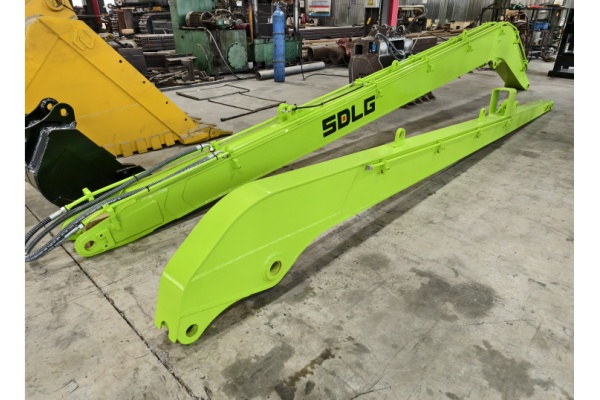
Repositioning the machine
Long reach arrows: require less frequent reorientation
One of the main advantages of long-reach booms is their ability to significantly reduce the need to reposition the machine. This feature is especially useful when working on large-scale projects or in hard-to-reach areas. Increased reach allows operators to cover a larger area from a single position, minimizing the time and effort required to reposition the excavator.
In situations such as dredging along a river bank or working on steep embankments, reducing the need to change position improves safety. Operators can maintain a stable position on a solid surface while performing tasks in potentially unstable areas. This capability not only improves efficiency, but also reduces the risk of accidents associated with frequently moving the machine over difficult terrain.
Additionally, the ability to operate from a fixed position for extended periods of time can result in significant fuel savings and reduced wear on the machine's undercarriage. In long-term projects, these benefits can significantly reduce operating costs and increase equipment life.
Telescopic booms: increased maneuverability in confined spaces
Although telescopic booms may require more frequent repositioning than their long-reach counterparts, they provide superior maneuverability in tight spaces. This characteristic makes them indispensable for urban construction, renovation work and any other situations where space is limited.
The adjustability of telescoping booms allows operators to precisely adjust boom reach without moving the entire machine. This accuracy is especially useful when working near existing structures, utility lines, or in areas with multiple obstacles. Operators can extend or retract the boom as needed, making it easier to navigate tight spaces and reduce the risk of collateral damage.
For multi-level work, such as demolition or façade maintenance, telescopic booms allow for quick switching between different working heights. This flexibility eliminates the need for constant excavator movement, ensuring a smoother and more efficient workflow in complex, three-dimensional work environments.
Optimizing site layout for different boom types
Effective job site planning is critical when working with different types of booms to ensure maximum efficiency and safety. For projects usinglong reach arrows, prioritize creating clear work areas that allow the excavator to remain in a fixed position for long periods of time. This approach minimizes the need for repositioning and allows operators to take full advantage of the extended boom reach.
When working with telescopic booms, special attention should be paid to creating flexible access roads that take into account the need for frequent changes in the position of the excavator. Consider strategic placement of materials and equipment to minimize obstructions and ensure smooth transitions between different work areas. Additionally, consider vertical clearance requirements at different boom extension levels to ensure safe operation in multi-level work environments.
Regardless of boom type, consider safety requirements when planning your site. Develop clear communication protocols for operators and ground personnel and designate designated areas for material storage, equipment maintenance, and personnel movement. By tailoring your site layout to the characteristics of the boom type you choose, you can significantly improve the overall efficiency and safety of your project.
Choosing between a reach boom and a telescopic boom for your excavator depends on the specific requirements of your project. Reach booms are great for deep excavation and large-scale excavation work, providing extended reach and reducing the need for repositioning. Telescopic booms, on the other hand, provide adjustable reach and precision, making them ideal for urban construction and work in confined spaces. When making your decision, consider factors such as project scope, site conditions, and operational requirements. By choosing the right type of boom, you can significantly improve the productivity, efficiency and safety of your excavator on the job site.