
How does an excavator arm work?
The excavator arm operates through a complex hydraulic system that converts pressurized fluid into precise mechanical movement. This mechanism allows operators to control enormous forces with incredible precision, making excavators invaluable for railroad construction, mining operations, and demolition projects. The arm design integrates multiple hydraulic cylinders, control valves and mechanical connections that work in harmony to provide the lifting, digging and positioning capabilities required for heavy-duty construction work.
Hydraulic system: how do hydraulics generate force?
Pascal's principle in action
The basis of each excavator arm is Pascal's principle, which states that pressure applied to a confined fluid is transmitted equally in all directions. When your car's engine drives a hydraulic pump, it creates pressurized hydraulic fluid that flows through carefully designed circuits to power the arm's movement. This pressurized fluid, usually specialized hydraulic oil, carries enormous energy that can be precisely controlled and directed to where it is most needed.
Think of hydraulic fluid as the life blood of your excavator. The system operates at pressures ranging from 3,000 to 6,000 PSI, turning relatively small input forces at the pump into massive output forces at the arm cylinders. This multiplication effect allows a single operator to control movements that would otherwise require enormous mechanical advantage through complex gear systems.
Hydraulic cylinders and force generation
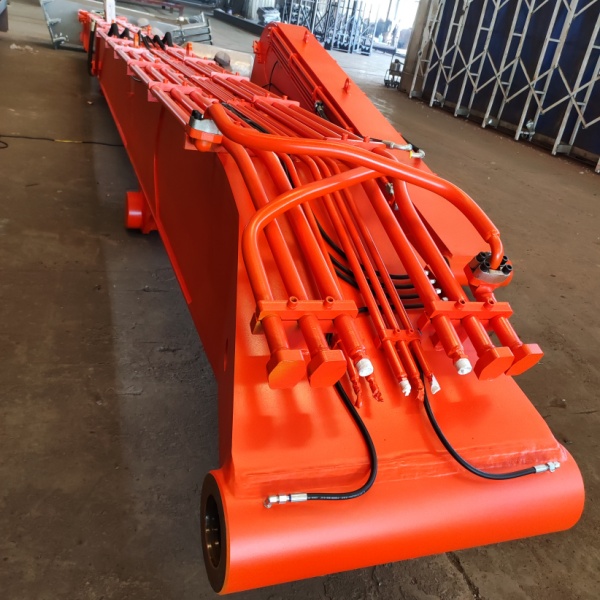
The heart of an excavator's arm movement is in its hydraulic cylinders, where pressurized fluid is pushed against piston heads to create linear motion. Each cylinder contains a precisely machined piston connected to a rod that expands and settles depending on the direction of fluid pressure. When hydraulic fluid enters one side of the cylinder, it causes the piston to move, stretching or pulling the rod with tremendous force.
Modern excavator arms typically include three main cylinders: a cylinder for vertical lifting, an arm cylinder for extending reach, and a bucket cylinder for digging and dumping. Each cylinder operates independently but coordinates with the others to achieve complex movements. Cylinder bore diameter directly affects force output - larger diameters generate more force but require larger volumes of fluid, creating engineering trade-offs between power and speed.
Movement control
joystick control systems
Modern excavator arms respond to operator commands using sophisticated joystick control systems that translate arm movements into precise hydraulic actions. When you move the joystick, you are actually controlling hydraulic pilot valves that direct the main system's fluid flow to specific cylinders. This pilot control system provides the mechanical advantage needed to control enormous hydraulic forces with minimal physical effort on the part of the operator.
Each joystick movement corresponds to a specific function of the arm - forward and backward movements typically control the extension and retreat of the arm, while left and right movements control the rise and fall of the boom. The beauty of this system lies in its proportional control ability, where small movements of the joystick create soft hand movements, while full deflection of the joystick produces maximum speed and force output.
Valve Control Technology
The magic of a smooth excavator arm happens in the main control valve, often called the pilot valve or control block. This complex component contains multiple spool valves that precisely regulate the flow of hydraulic fluid to each cylinder based on operator input. When you control the joystick, pilot pressure moves these coils, opening and closing passages that direct the flow of fluid.
Modern control valves include advanced features such as load sensing technology that automatically adjusts system pressure based on actual operating requirements. This intelligent pressure control reduces energy consumption while maintaining the responsive feel skilled operators expect. Some systems even include electronic rewriting capabilities that allow you to program movement patterns for repetitive tasks.
Coordinated movement
Multi-cylinder coordination
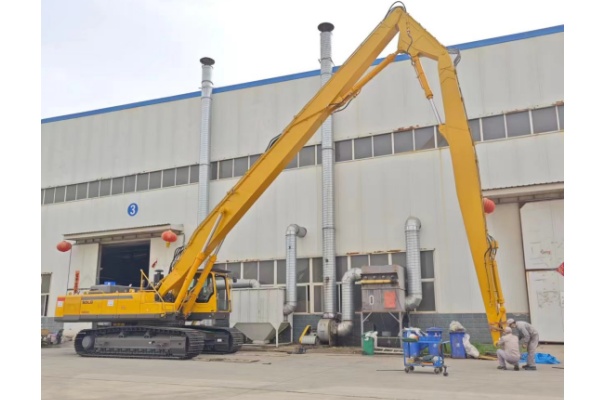
Achieving smooth, coordinated movement requires precise synchronization between the boom, arm and bucket cylinders that make up the excavator arm assembly. Unlike simple single-axis machines, excavators require complex multi-axis coordination, where multiple cylinders operate simultaneously to create natural, flowing movements that follow curved paths rather than abrupt mechanical movements.
When you perform a typical digging motion, all three cylinders work together - the boom cylinder controls the vertical position, the arm cylinder controls the reach distance, and the bucket cylinder controls the cutting angle. This coordination occurs through complex valve timing that allows fluid to flow into multiple cylinders in precisely controlled proportions, creating the smooth arcing movements characteristic of skilled excavator operation.
Kinematic chain relations
The excavator frame operates as a kinematic chain, where the movement of each joint affects the position and orientation of all subsequent components. Understanding these relationships helps operators develop the intuitive sense needed to operate effectively. The pointer acts as the main vertical drive, the arm provides reach control, and the bucket provides final positioning and orientation of the work tool.
Modern excavator design optimizes these kinematic relationships to maximize the work envelope while maintaining acceptable force characteristics throughout the entire range of motion. Engineers carefully balance cylinder sizes, mounting points and lever ratios to ensure consistent operation whether the arm is working close to the machine or at full extension.