
What is a tilt bucket?
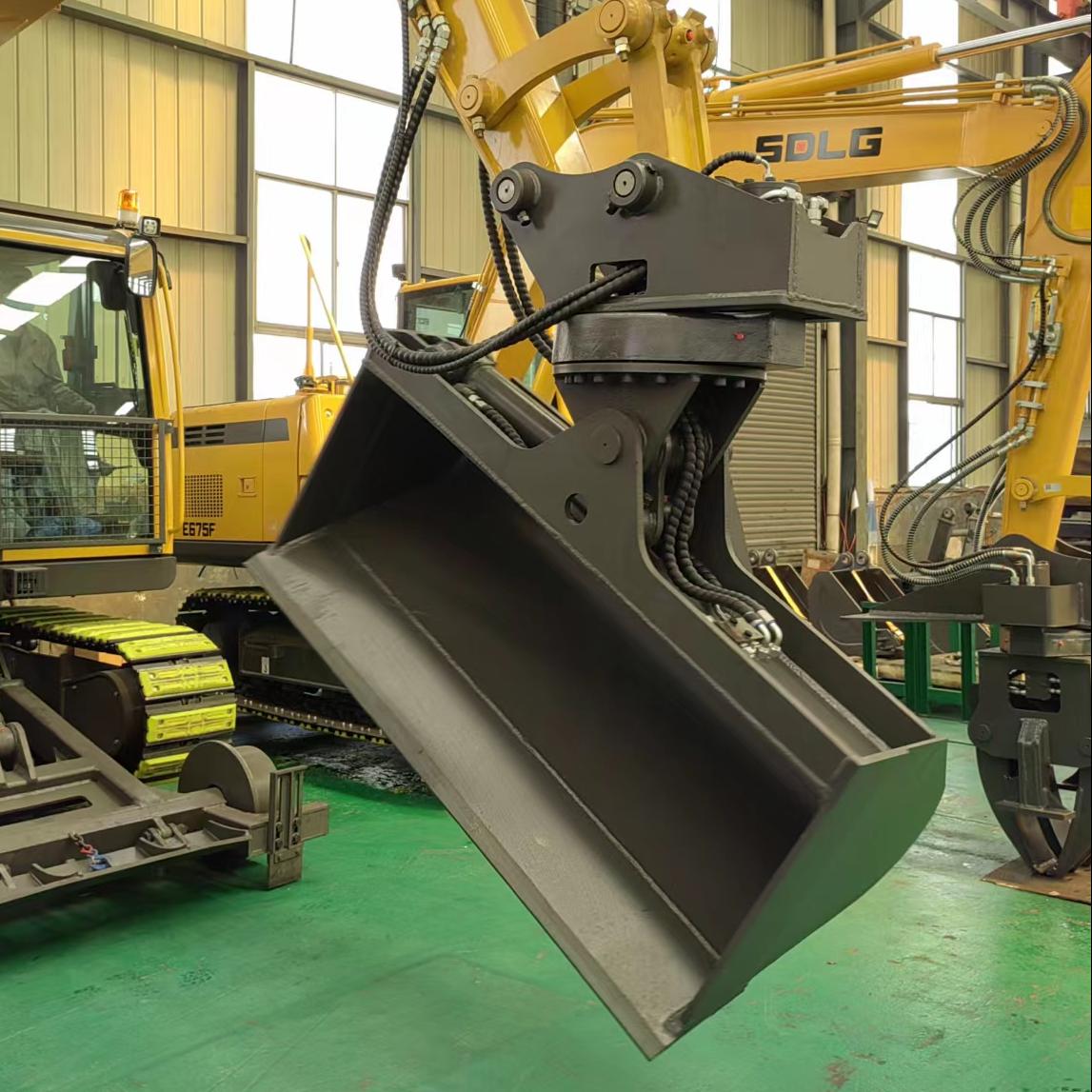
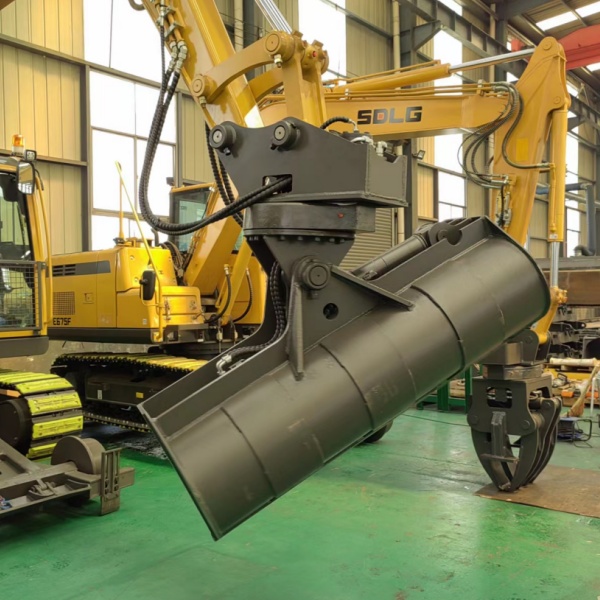
The Tilt Bucket is a specialized excavator mount designed to improve operational flexibility and efficiency in a variety of construction and engineering projects. Unlike standard buckets that have fixed positions, the Degree Rotating Hydraulic Tilt Bucket can rotate 360 degrees and tilt up to 45 degrees in multiple directions. This remarkable versatility allows operators to work at a variety of angles without having to move the entire excavator, greatly increasing productivity and accuracy in applications such as slope grading, ditch cleaning and railroad maintenance. The hydraulic control system allows for smooth and precise movement, making it an essential toolfor contractors, seeking to improve efficiency, especially in tight spaces or challenging terrain. With features such as adjustable angles and rotation capabilities, tilt buckets have revolutionized excavation work, reducing the need for manual labor and minimizing project completion time.
Specialized mount for excavators
Excavator capabilities
The degree of rotation of the hydraulic ditch tilt bucket stands as an attachment that transforms what the excavator can achieve. Traditional excavator buckets remain fixed in place, limiting their functionality to simple digging and collecting operations. In contrast, tilt buckets introduce a new dimension of movement with their ability to rotate and tilt independently of the excavator's arm. This expanded range of motion allows operators to tackle complex tasks that previously required specialized equipment or even manual labor.
The versatility provided by inclined buckets becomes especially valuable in projects with irregular surfaces or narrow spaces. For example, during maintenancerailway operatorscan easily form shoulders and fill slag without constantly repositioning the excavator. Likewise, in drainage projects, the ability to work at precise angles ensures correct water flow paths without the need for subsequent manual adjustments. This versatility directly translates into reduced equipment requirements on jobsites, as one tilt bucket-equipped excavator can replace multiple specialized machines.
Applications in all industries
The utility of tilt buckets extends far beyond basic excavation, finding important applications in a variety of industries. In railroad construction and maintenance, these fasteners excel in ballasting, shoulder shaping, and drainage ditch creation, tasks that require extreme precision to meet exacting industry standards.Railway sectorespecially enjoys the ability to carry out maintenance without disturbing adjacent rails, thanks to the controlled bucket movement capabilities.
In the construction industry, slope buckets prove invaluable for slope grading, foundation preparation, and landscaping applications where contoured surfaces are required. Mining operations use these fixtures to selectively handle materials and clean around processing equipment. Additionally, municipalities and utility companies rely on tilt buckets to maintain road drainage, install pipelines, and utility trenches where space limitations often pose significant challenges. The cross-industry use of tilt buckets is driven by their ability to improve accuracy while reducing both time and labor requirements in a variety of applications.
Key benefits for operators
The implementation of power rotation of a hydraulic inclined ditch bucket provides significant benefits that directly impact the operational efficiency and economics of the project. Perhaps most significant is the dramatic reduction in excavator repositioning time; Operators can adjust the angle of the bucket rather than moving the entire machine, which saves fuel, reduces ground disturbance and speeds up project completion. This efficiency gain becomes particularly noticeable in linear projects such as railway work or pipeline installations.
From an ergonomic point of view, tilting buckets reduce operator fatigue by eliminating awkward machine positioning and the need for manual finishing work. Improved visibility of the work area improves safety while allowing for more precise material placement. Additionally, the versatility of these applications reduces the fleet size required for projects, reducing capital investment and maintenance costs. When considering the overall savings of a project, investing in a quality tilt bucket typically results in returns through faster completion times, reduced labor costs, and extended equipment life due to more appropriate application of force during operations.
How does a tilt bucket work?
Hydraulic control systems
The exceptional versatility of the rotating hydraulic tilting ditch bucket comes from its sophisticated hydraulic control system. Unlike standard buckets, which rely solely on the basic hydraulic circuits of the excavator, inclined buckets incorporate additional special hydraulic cylinders and rotators specifically designed to provide controlled jointing. These systems typically feature dual cylinders that allow precise tilting in both directions, while a hydraulic rotator module allows for full 360-degree rotation.
Hydraulic architecture typically includes pressure-compensating valves that provide smooth, controlled movements regardless of load changes. This precision becomes especially important when working on delicate surfaces or when precise quality control is required, such as in maintenance operationsrailways. Control integration varies by manufacturer, but most modern systems have proportional controls that allow operators to adjust travel speed and force based on task requirements. Hydraulic circuits also include safety features such as retaining valves that maintain the bucket's position even in the event of a sudden loss of hydraulic pressure, preventing unexpected movement that could compromise performance or safety.
Design features for durability
Given the challenging conditions in which tilt buckets operate, manufacturers such as Tiannuo implement specific design features to ensure exceptional durability and reliability. High-strength materials form the core of these fasteners, with premium options using Q460 steel for structural components and abrasion-resistant WH60C steel for wear surfaces that come into contact with abrasive materials. Pivot points that experience significant stress during operation are typically equipped with hardened bodies and oversized pins to effectively distribute forces and minimize wear.