
How does a long reach boom excavator work?
Understanding how it worksexcavator boomlong range, requires studying the complex interactions between advanced structural components, advanced hydraulic systems and precision engineering. These specialized systems operate through a combination of reinforced boom and arm assemblies that extend the operating envelope far beyond standard excavator capabilities. The basic principle includes extended arrow segments and arms working in coordination with upgraded hydraulic cylinders that generate enough force to maintain precise control over long distances. The hydraulic system ensures smooth operation, providing the power needed to tackle long-distance tasks, while design modifications effectively distribute loads across the extended frame. Hydraulic cylinders connected to arm segments allow operators to expand and contract the cylinders by rotating arm parts at connection points to achieve remarkable distances that make these systems invaluable for specialized applications ranging from deep excavations to dredging operations.
Basic Mechanical Structure
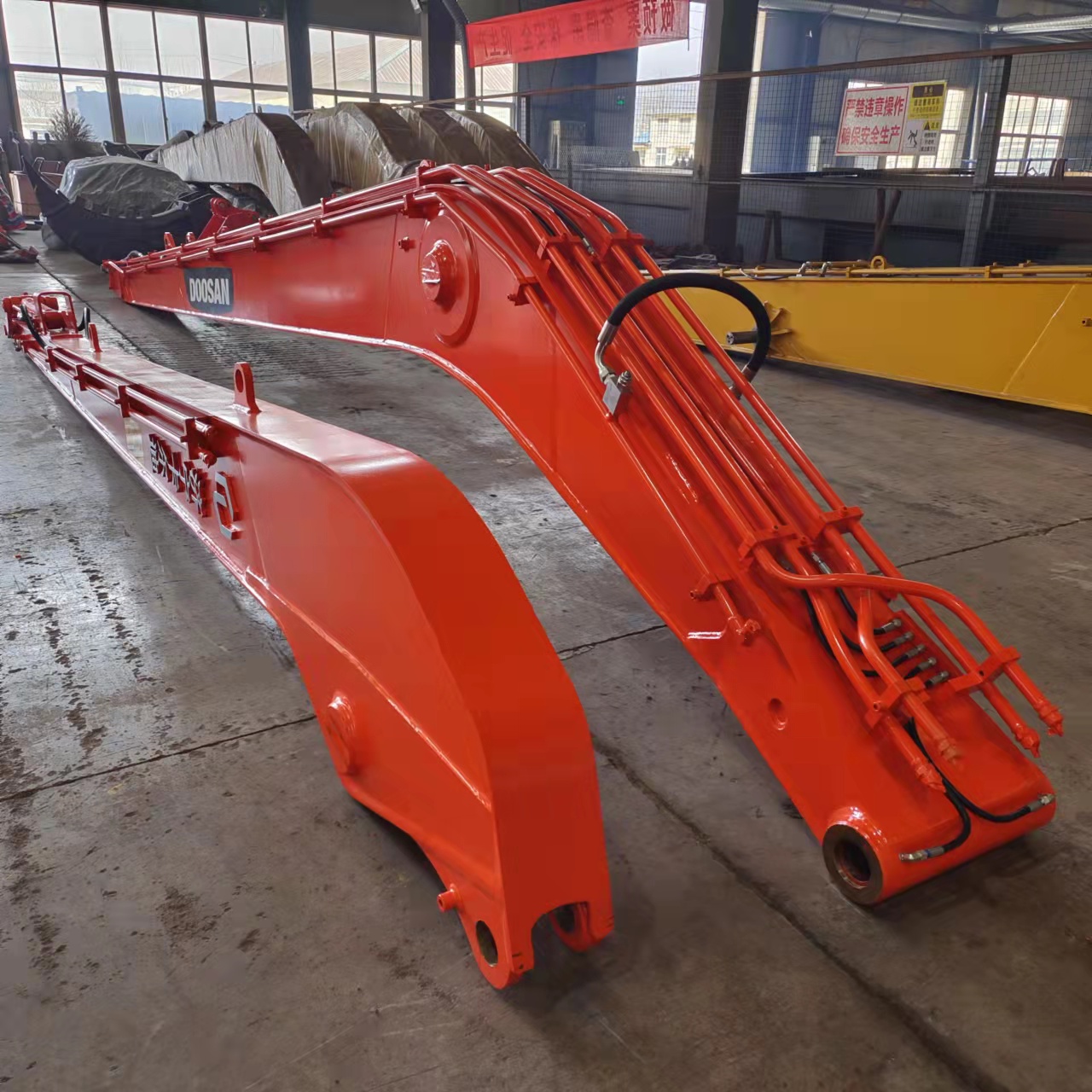
Extended boom and arm assembly design
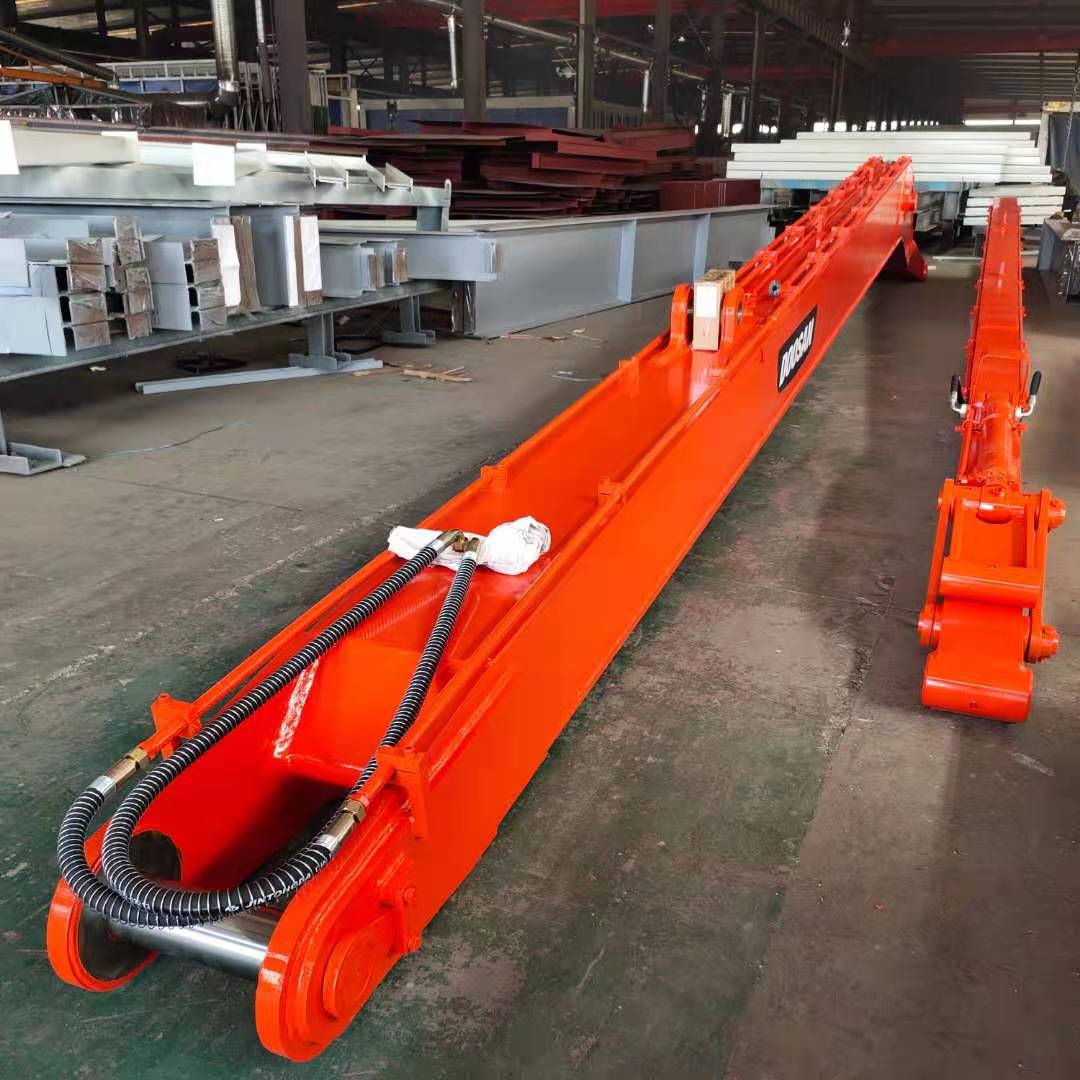
The foundation of any long-range excavator system lies in its carefully designed structural components, which must withstand enormous forces while maintaining operational accuracy. The boom excavator's long arm is constructed from structural tensile steel and heavy-duty components to provide the strength needed for demanding applications. An extended boom assembly typically consists of reinforced steel sections that are precision welded and machined to create a single structure capable of handling the increased leverage forces generated by extended reach operations.
The engineering challenge becomes especially challenging given the exponential increase in strain as the boom expands. Each additional meter of coverage multiplies the structural loads on the entire assembly, requiring complex stress distribution systems and reinforcement points in critical connection areas. The boom sections are designed with internal ribs and strategic thickness variations that optimize the strength-to-weight ratio while maintaining the flexibility needed for smooth hydraulic operation.
Integration and positioning of hydraulic cylinders
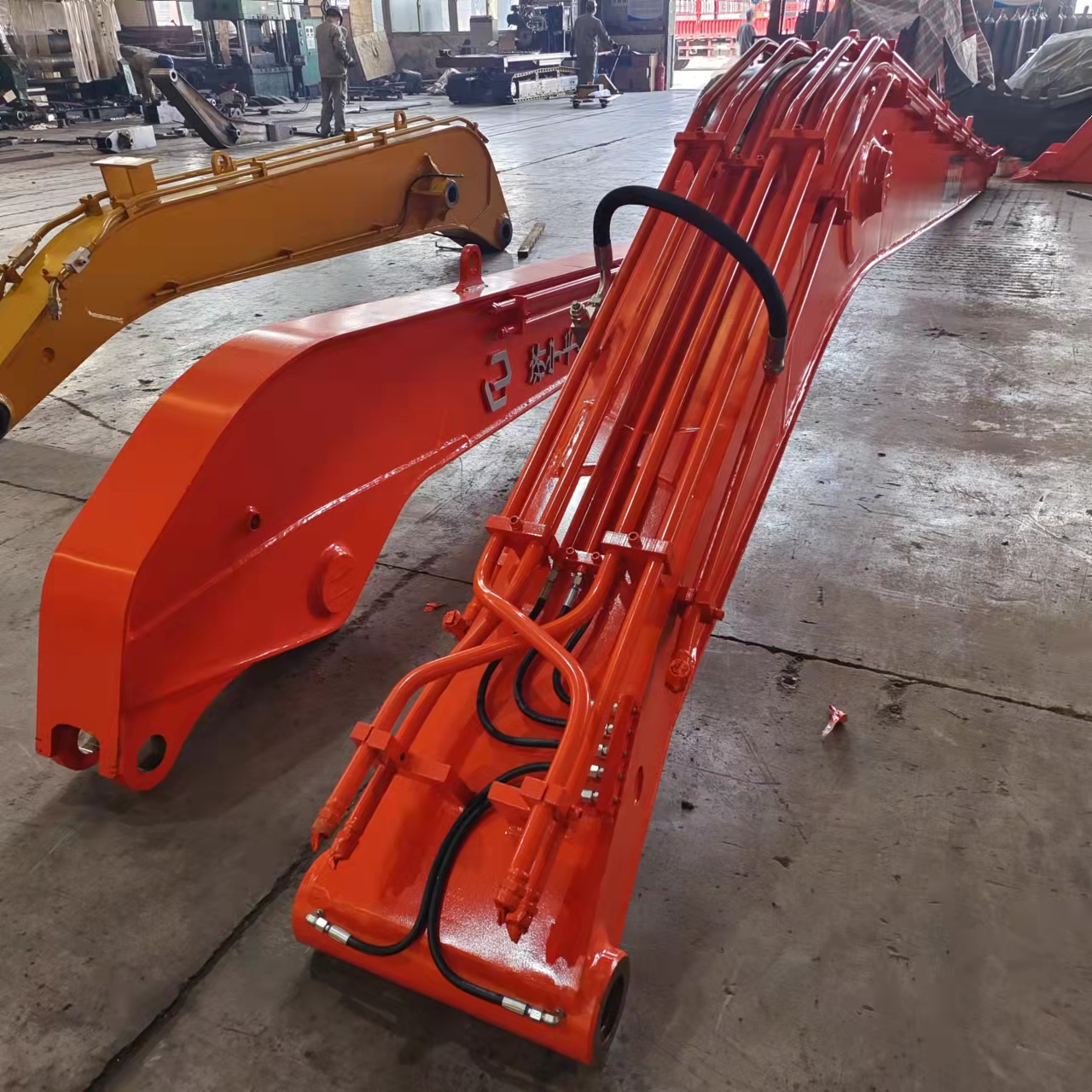
Basic cylinders connect the base of the excavator to the base arm, controlling the height of the base, while the extended reach configuration requires additional consideration of cylinder placement and size. The hydraulic cylinder, piston, rod and seals work together to control the movement of the boom arm, with advanced coverage systems using larger bore cylinders to generate the increased force needed for long operations.
Hydraulic cylinder placement becomes critical in extended boom systems where traditional mounting points may not provide adequate leverage or structural support. Advanced designs include multiple mounting points and reinforced cylinder brackets that distribute hydraulic forces over wider structural areas. Cylinder bar diameter and stroke length are specifically designed to provide optimal performance throughout the extended range of motion while maintaining structural integrity under maximum load conditions.
Load Sharing and Voltage Control Systems
Control of structural loads viaextended boom systemrequires complex engineering approaches that go beyond simply scaling standard excavator components. The extended length creates significant moment forces that must be carefully distributed throughout the structure to prevent fatigue failures and maintain operational safety. Strategic placement of structural reinforcements, including internal support and external support ribs, helps distribute these forces effectively.
Advanced stress management systems include specialized joint designs that control flexibility under load while maintaining structural integrity. These systems often include engineered flex points that absorb service stresses and prevent them from concentrating at critical connection points. The result is a boom system that can handle the demanding workloads associated with long-span operations while maintaining the precision required for delicate work.
Integration with standard excavators
Hydraulic System Modifications and Upgrades
Converting a standard excavator to accommodate a long-range boom system requires comprehensive hydraulic modifications that meet both flow and pressure requirements. The hydraulic systems in long-range excavators are reliable and capable of handling significant stresses due to longer reach times and heavier loads, requiring upgrades to pumps, valves and filtration systems to meet increased demands.
Major hydraulic modifications include upgrading the main hydraulic pump to provide the increased flow rates and pressure capabilities required for extended coverage operations. The hydraulic reservoir usually requires expansion to accommodate the additional fluid volume required by long hydraulic lines and large cylinders. Advanced pressure compensation systems help maintain consistent performance regardless of load conditions or operating positions.
Improved counterweight and stability
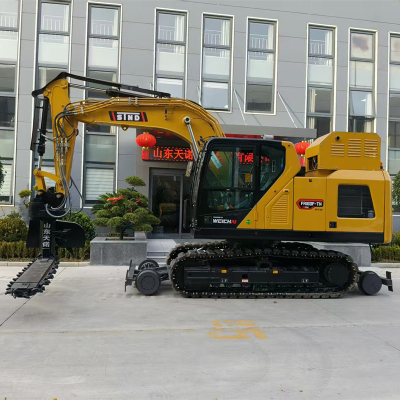
Maintaining excavator stability with an extended boom system requires careful attention to counterweight distribution and modifications to the base machine. Extended range significantly shifts the center of gravity during operation, potentially compromising stability if not given due care. Most long-lasting conversions include additional counterweight systems strategically placed to compensate for the extended boom assembly.
Fitting may require widening or widening the track to provide a wider stable base that can safely support expanded coverage operations. Some systems include dynamic counterweight systems that automatically adjust based on boom position and load conditions. These sophisticated systems help maintain optimal stability throughout the work envelope while maintaining the mobility and versatility of the excavator.
Integration and calibration of control systems
Integration of extended systems boom with existing Excavator control systems require precise calibration and often software modifications to account for changed operating parameters. Control systems must be recalibrated to account for changing leverage ratios and hydraulic requirements associated with extended coverage operations. This includes adjusting joystick response curves and implementing load sensing systems that provide operators with appropriate feedback.
Modern excavators often include electronic control systems that can be programmed to optimize performance for specific attachment configurations. These systems monitor hydraulic pressure, boom position and load conditions to provide automatic adjustments that improve both productivity and safety. The integration process typically involves extensive testing and fine tuning to ensure smooth operation under all operating conditions.
Operating mechanics in action
Generation and control of hydraulic force
Hydraulic cylinders in an excavator operate using pressurized hydraulic fluid to generate force that can be used for maneuveringexcavator and moving boom, dyper and bucket. In extended coverage applications, this principle becomes more complex due to increased distances and loads. Pressurized hydraulic fluid drives these cylinders and offers precise movements, with advanced pressure compensation systems ensuring consistent operation throughout the extended work envelope.
Hydraulic force generation in long-range systems involves sophisticated pressure control that maintains consistent power delivery regardless of boom position or load conditions. Advanced flow control valves regulate the distribution of hydraulic fluid to multiple cylinders simultaneously, allowing coordinated movements that maintain stability and precision. The system typically includes pressure sensors and feedback loops that continuously monitor and adjust hydraulic parameters for optimal performance.
Precise coordination of movement
Achieving precise movements with an advanced boom system requires complex coordination between multiple hydraulic cylinders and control systems. The extended length amplifies any subtle changes in cylinder motion, making precision control systems essential for precise positioning and smooth operation. Advanced control algorithms help compensate for mechanical differences between standard and advanced configurations.
Coordination systems monitor boom position, load conditions and operator inputs to provide seamless motion control throughout the extended coverage envelope. These systems often include predictive algorithms that predict motion requirements and pre-position hydraulic systems for optimal response. The result is smooth, precise operation that supports the operator's ability to perform delicate tasks even at extreme distances.
Load handling and operational efficiency
Effectively managing loads with extended reach systems requires an understanding of how leverage forces affect lift and operational stability. The long range system provides approximately 2 times the range of the standard system, but this extended range comes with a corresponding reduction in lift that must be carefully managed. Operational mechanics include load monitoring systems that provide real-time feedback on safe operating limits.
Optimizing efficiency in long-distance operations involves coordinating boom movements to minimize energy consumption while maintaining productivity. Advanced systems include energy recovery circuits that capture and reuse hydraulic energy during boom reduction operations. These efficiency measures help offset the increased energy demands associated with extended coverage operations while maintaining competitive operating costs.