
How to use a hedge trimmer?
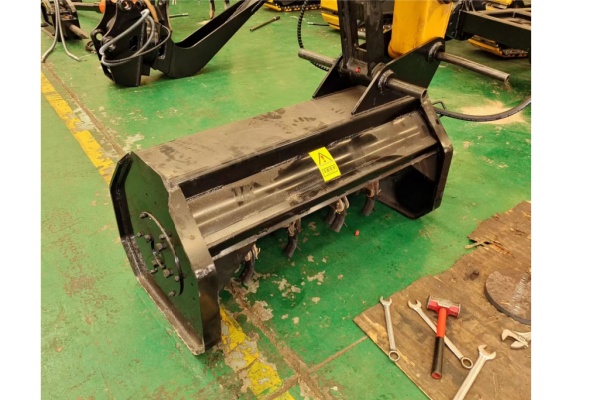
Mastering the usebrush cutter for excavator Essential for effective vegetation management in various industries. This powerful attachment turns your excavator into a versatile land clearing machine that can easily handle dense undergrowth and small trees. Proper installation, settings and control are critical to the efficient operation of these hydraulic attachments. Let's take a closer look at the step-by-step process of using a hedge trimmer for maximum clearing performance and safety.
Correct installation:
Choosing the right hedge trimmer for your excavator
Choosing the right onebrush cutter for your excavatorThis is the foundation for successful operation. Consider factors such as the size of your excavator, the capacity of its hydraulic system, and the type of vegetation you'll be clearing. Larger excavators typically require more powerful brush cutters with wider working widths, while compact excavators may benefit from more maneuverable and lightweight models.
Ensure the weight and dimensions of the brush cutter match the lifting capacity and boom configuration of your excavator. Compare the hydraulic flow requirements of the attachment with your machine's specifications to ensure optimal performance. Remember: a properly sized brush cutter will increase the versatility of your excavator without compromising its stability or power.
Step-by-step guide to mounting a hedge trimmer
Once you have selected the right hedge trimmer, follow these steps to ensure it is installed correctly:
Place the excavator on a level surface and apply the parking brake.
Lower the boom and handle to position the trimmer attachment point at a comfortable working height.
Remove any existing attachments and clean the quick release coupling or mounting bracket.
Align the trimmer mounting pins with the excavator mounting points.
Carefully maneuver the excavator to ensure the pins are fully engaged.
Secure the locking mechanism, whether manual pins or a hydraulic quick release coupling.
Double check all connections to ensure they are secure.
Ensuring reliable hydraulic connections for optimal performance
Proper hydraulic connection is critical to the functionality and safety of your hedge trimmer. Follow these guidelines:
Before connecting, inspect all hydraulic hoses and fittings for damage or wear.
Clean the hydraulic couplings on the excavator and brush cutter to prevent contamination.
Connect hydraulic lines according to the manufacturer's instructions, ensuring they are not kinked or twisted.
Make sure the connections are tight and secure to prevent leaks during operation.
Check the excavator's hydraulic oil level and top up if necessary to provide the extra flow needed by the brush cutter.
Once the hedge trimmer is securely mounted and properly connected, you are ready to adjust the cutting parameters for optimal performance.
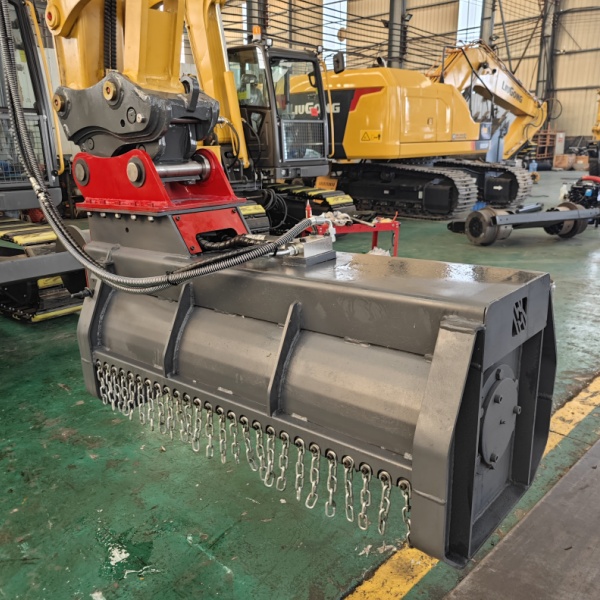
Adjust cutting parameters:
Optimizing cutting speed for different vegetation types
The key to effective brush cutting is to properly match the cutting speed to the type of vegetation. Dense, woody brush requires a slower cutting speed to ensure the blades can effectively cut through it, while sparse vegetation can be mowed at a higher speed. Start with the following guidelines:
For thick hardwood saplings (up to 4 inches in diameter): Set hydraulic flow to approximately 60-70% of maximum.
For medium-sized shrubs and small trees: aim for 70–80% of maximum flow rate.
For sparse shrubs and tall grass: You can increase the flow rate to 80–90% of the maximum for faster cleaning.
Remember, these are just starting points. Observe the trimmer's operation and adjust accordingly. Listen to the engine and hydraulic system—if you hear grinding noises, reduce speed. The goal is to maintain an even cut without getting the machine stuck.
Set the ideal cutting width for maximum efficiency
Mowing width directly impacts clearing speed and equipment load. While it may be tempting to mow as wide a strip as possible, this isn't always the most efficient approach. Consider the following factors:
For dense vegetation, reduce the cutting width to approximately 2/3 of the maximum width of the hedge trimmer. This will allow the blades to cut through the vegetation more thoroughly.
For thinner growth, you can increase the width to full width, which will maximize clearing speed.
On slopes or uneven terrain, reduce the cutting width to maintain better control and avoid overloading the attachment.
Experiment with different widths to find the optimal balance between clearing speed, machine load and fuel efficiency.
Fine-tune parameters for challenging terrain conditions
Changes in terrain require adaptive strategies. Here's how to adapt to different conditions:
On steep slopes: Reduce cutting speed and width. If possible, work perpendicular to the slope for better stability.
In rocky areas: Increase the cutting height slightly to avoid damaging the blade. Be prepared to quickly raise the cutter if you encounter large rocks.
In wet or muddy weather, reduce speed to avoid getting stuck. It's recommended to make multiple passes to avoid overloading the hedge trimmer.
When working in difficult areas, always prioritize safety and equipment durability over speed. Now that you've optimized your cutting parameters, let's move on to mastering your equipment's controls. brush cutter for excavator.
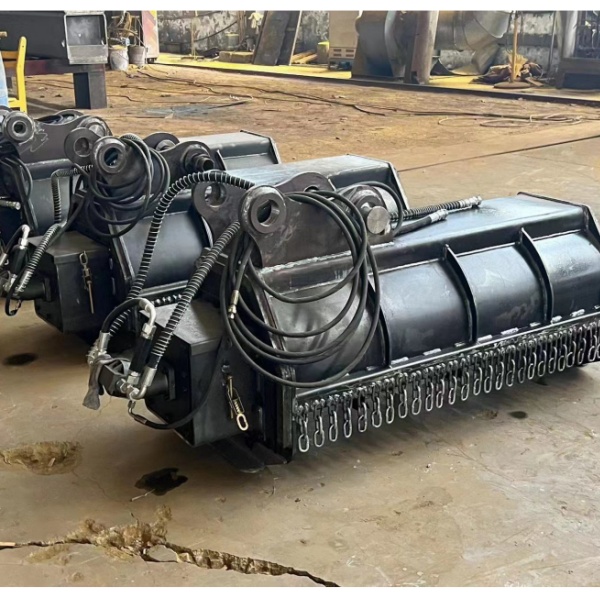
Operational control
Mastering the technique of controlling an excavator with a joystick for precise cutting
Proper joystick control is crucial for effective trimming. Here are a few tips for improved precision:
Use smooth, measured movements rather than jerky ones. This reduces equipment wear and increases cutting efficiency.
Practice operating the levers for finer control, especially when navigating around obstacles or in tight spaces.
Coordinate boom, arm and bucket movements to maintain a constant cutting height and angle.
Whenever possible, use the excavator's steer function to guide the brush cutter in an arc through the vegetation, increasing the cutting area with each pass.
Remember, the goal is to achieve a smooth, continuous motion. With practice, you'll develop a rhythm that maximizes trimming speed and reduces stress on the machine.
Strategies to prevent kickback and stalling while working
Kickback and stalling can be dangerous and cause equipment damage. To ensure trouble-free operation, use the following strategies:
Approach large trees or dense brush gradually. Allow the hedge trimmer to dig into the vegetation before turning on full power.
If you feel the cutter start to lift or kick back, immediately reduce power and adjust the angle of attack.
If the vegetation is very dense, try a top-down approach. Start by trimming the top portion before tackling the base.
Monitor the hydraulic pressure gauges. If you notice a sudden pressure surge, reduce engine speed to prevent engine stalling or damage to the hydraulic system.
Understanding your machine's limits and reacting to them promptly will significantly reduce the risk of kickback and stalls.
Best practices for maneuvering in tight spaces and on slopes
Working in confined spaces or on slopes requires special care and skills:
On slopes, always position the excavator with the tracks perpendicular to the slope for maximum stability.
In tight spaces, take advantage of the excavator's 360-degree rotation. This allows you to clear the space without having to constantly move the entire machine.
When working near buildings or valuable trees, use the brush cutter's side-cutting function. This allows you to maintain a safe distance and effectively clear vegetation.
In very tight spaces, consider using the hedge trimmer in a vertical position to make precise cuts or to access areas that are inaccessible in a horizontal position.
When working in difficult conditions, always prioritize safety over speed. If an area appears too dangerous, consider alternative clearing methods or equipment.
Mastering the use brush cutter for an excavatorSignificantly expands your ability to clear the area. By focusing on proper installation, optimizing cutting parameters, and honing your management skills, you can maximize the efficiency and safety of your vegetation management projects. Remember that constant practice and careful attention to the operation of your equipment is the key to mastering these powerful attachments. As you gain experience, you will develop an intuitive sense of how to best approach different clearing options, which will ultimately increase your productivity and expand the range of services you offer.
When choosing a brush cutter for an excavator, pay attention to trusted manufacturers and authorized dealers who specialize in attachments for heavy equipment. Explore online marketplaces that offer products for the construction and forestry industries, and don't hesitate to contact local equipment suppliers for quotes and product demonstrations.