
What does a ballast tamper do?
Have you ever been interested in complex equipment that provides impeccable operation of our railways? Do not look further, we will delve into the tamers of ballast - backstage tools for servicing railways. These reliable machines are necessary to maintain safety, performance and durability of railway tracks. But what is a dramatic beam and how does it contribute to the effectiveness of railway systems?
Ballast's lifter, also known as the trail of the track or ballast regulator, is a specialized machine used to maintain railways for sealing (or tamping) of the ballast of the track under the railway tracks. This process is necessary to maintain the correct geometry and the stability of the path. Ballast, usually made of crushed stone, serves as the basis for railway tracks, distributing the load from passing trains and facilitating drainage. Over time, this ballast can shift or settled, which leads to irregularities on the path that can jeopardize safety and quality of driving.
This is where the tramist appears. This ingenious machine performs several important functions that provide uninterrupted and safe operation of our railway systems. Let's look at its main tasks.
Laying and alignment of ballast
The main function of the ballast tamping, as follows from its name, is the tamping or compaction of ballast. This process includes a seal of stone ballast under and around railway sleepers (also called sleepers). The sealing effect provides an uniform distribution of ballast and proper support for the design of the track.
Modern trafficants are equipped with vibrational tamping tools that can be inserted into the ballast on both sides of the sleepers. These tools, often called “teeth” or “tamping banks”, compress and vibrate ballast, effectively tamping it under the sleeper. This process is crucial for several reasons:
It provides a stable path of the path, preventing its excessive movement under the weight of passing trains.
It helps to maintain the correct leveling of the path, guaranteeing that the rails will be at the right height and at the right angle.
It improves drainage, creating the desired level of seal, which allows water to be removed from the design of the path.
The ability to tamping ballast to accurately compact ballast distinguishes it from manual methods of tamping the past. It can reach the level of sequence and efficiency, which could not be repeated manually, guaranteeing that each section of the path will receive equally high -quality processing.
Moreover, many modern ballast tummers are equipped with complex alignment systems. These systems use lasers or other sensors to ensure the perfect leveling of the path both horizontally and vertically. As the car moves along the way, it can make the smallest adjustments to the laying of ballast in order to correct any deviations from the ideal geometry of the path.
Correction of the geometry of the path
In addition to simple laying ballast, the swimming of ballast plays an important role in correcting and maintaining the correct geometry of the path. Over time, factors such as the weight of passing trains, weather conditions and natural shrinkage can lead to a deviation of the path from the proposed position. These deviations can lead to bumpy driving for passengers, increased wear of the train components and, in severe cases, to safety risks.
A is equipped with a ballast tumper to solve these problems using a process called the equalization of the path. This includes adjusting the vertical and horizontal leveling of the path to comply with certain engineering standards. Here's how it works:
Measurement: The tramist first measures the existing position of the track using complex sensors and compares it with the desired path geometry.
Rise: Then the machine lifts the caterpillar to the desired height.
Drill: while the path is raised, trim instruments compact ballast under it to fix a new position.
Alignment: At the same time, the tramist can shift the track horizontally to fix any lateral displacement.
This process allows you to perform incredibly accurate adjustments. Modern trafficants can adjust the geometry of the track with an accuracy of millimeters from the desired characteristics. This level of accuracy is crucial for maintaining high -speed railway lines, where even small defects can lead to serious problems at high speeds.
In addition, many crushed stone seizures are now equipped with computer systems that can store “design data” for the path. This allows the machine to automatically adjust the path in accordance with the proposed project, taking into account factors such as curves, turns (rolls on curves) and transition zones between different sections of the track.
Ballast seal
While the initial process of tamping seals ballast under the sleepers, the general sealing of the ballast layer is another important function of the ballast tram. This seal is vital for several reasons:
Increases the stability of the entire design of the path.
This increases the durability of ballast by reducing displacement and precipitation.
This increases the ability of the path to withstand the dynamic loads that occur during the passage of trains.
The swimming of ballast reaches this seal by combining its weight and vibration. As the car moves along the way, its significant weight helps to settle ballast. In addition, the vibrations that occur during the tamping process spread through the ballast layer, contributing to the settlement of stones in a denser, more stable configuration.
Some advanced tamping are also equipped with additional seals, such as rollers or vibration slabs. They can be used to further seal ballast, especially in the zones between the sleepers or along the roadsides of the canvas.
The level of seal is carefully monitored. Although a well -compacted ballast layer is desirable, excessive compaction can reduce the ability of ballast to bend and absorb vibrations, which can lead to increased wear of both the path and rolling stock. Modern ballast tummers use complex sensors and computer control to achieve the optimal level of seal on each section of the track.
It is worth noting that the sealing process also plays a role in the drainage capabilities of the path. A properly compacted ballast layer allows water to flow through the design of the path and divert it from it, preventing the accumulation of water, which can lead to erosion or frosty flowering in cold climate.
Railway ballast trambler for sale
Billing ballast is an indispensable tool in modern railway maintenance. Its ability to compact and level ballast, correct the geometry of the track and compact the ballast layer guarantees that our railway systems remain safe, effective and convenient for both passengers and cargo. As railway technology develops, we can expect that even more complex tracks of the path will play a decisive role in maintaining the infrastructure that connects our world.
If you are looking for a high -quality trumpeting beam, then you do not need to look for further than Tiannuo Machinery. Having 10 years of experience with multifunctional equipment for excavators, Tiannuo Machinery offers first-class tamping bars developed to meet the strict requirements of modern railways.
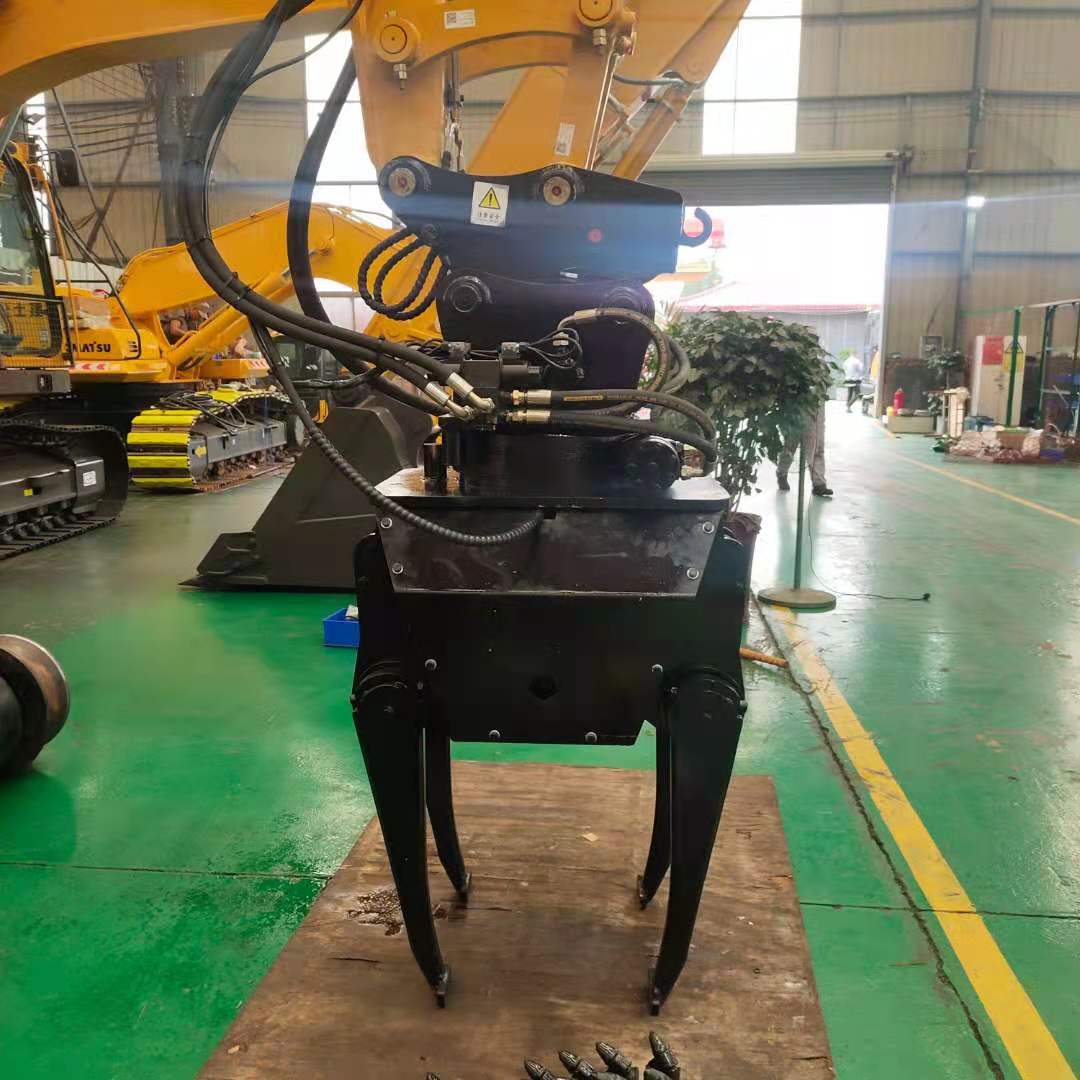
Our ballast tram workers have a range of clamping tamping 180-700 mm, options with four and eight paws are available. This versatility guarantees that our equipment can perform a wide range of tasks for servicing the path with accuracy and efficiency.
When choosing your Ballast Tempers, consider the possibility of partnership with a company that combines experience, innovation and customer support. Tiannuo Machinery meets all these requirements and even more. We invite you to contact our team to discuss how our ballast tramists can improve your railways maintenance operations.
Contact our manager by phonearm@stnd-machinery.comor contact our team at the addressrich@stnd-machinery.comAndtn@stnd-machinery.comLet's work together to ensure the uninterrupted and efficient operation of your railway systems!
Recommendations
Esveld, K. (2001). Modern railway path. MRI-Podakshn.
Lichtberger, B. (2005). Handbook on the paths: formation, upper path, maintenance, economy. Eurailpress.
Profillidis, V.A. (2006). Management and engineering on the railway. Ashgate Publishing, Ltd.
SELIG, ET, & WATERS, JM (1994). Geotechnology of ways and control of underground structures. Thomas Telford.
Federal Directorate of Railways. (2021). Guide to comply with security standards on the tracks. US Department of Transport.