
What types of sleepers are suitable for installation to replace sleepers on railway tracks?
Railway sleepers play an important role in the infrastructure of ways, ensuring stability, distribution of load and proper leveling of the rails. When servicing or modernizing railway tracks, the effective replacement of these sleepers becomes necessary, and it is here that a specializedRailway SpalpalizerEnters the game. Modern spapalizers are designed to work with various types of sleepers, but their compatibility and effectiveness can vary depending on the material of the sleepers, sizes and requirements for installation. As a rule, wooden, concrete and steel sleepers are suitable for replacement using a machine for replacing sleepers, similar to the one that Tiannuo Machinery is produced. However, the machine should be equipped with appropriate nozzles and settings for processing a specific weight, size and method of installing each type of sleeper. Modern spapalizers are often equipped with adjustable clamps that can be suitable for sleepers of various widths (usually up to 650 mm) and can work on standard tracks (1435 mm or 1520 mm), which makes them universal solutions for the technical maintenance of railways operating with various materials of the sleepers in various railway networks.
Wooden sleepers

Wooden sleepers, one of the oldest and most traditional types of railway sleepers, continue to be widely used in many railway systems around the world. Their natural properties and simplicity in circulation make them compatible with modern railway puttyers.
Characteristics and compatibility
Wooden sleepers usually weigh from 70 to 100 kg, which makes them much lighter than concrete alternatives. This reduced weight is beneficial when usingRailway Spalpalizer, since this creates a smaller load on the hydraulic systems of the machine and provides more efficient operation. The standard dimensions of wooden sleepers (width is approximately 250-300 mm, height of 150-200 mm and length 2.4-2.7 m) are well corresponded to the possibilities of processing most of the spapalizers, which usually have clips of up to 650 mm.
The natural flexibility of wood allows these sleepers to effectively absorb vibrations, while maintaining a good geometry of the path. When replacing wooden sleepers, a device for changing the sleepers can reliably capture them without the risk of damage, unlike more fragile materials that can crack under pressure.
Installation recommendations
Installation of wooden sleepers using a machine for replacing sleepers on railway tracks is relatively simple. The machine can easily place the sleeper perpendicular to the rails and lower it into place. A relatively small weight means that less energy is required for lifting and positioning, which can accelerate the replacement process.
Wooden sleepers are also easier to drill and insert crutches during installation, which complements the efficiency provided by the device for changing the sleepers. After installing the mounting system, you can quickly attach, which allows the technical maintenance teams to quickly move along the path.
Service aspects
One of the considerations when using a device for replacing sleepers on wooden sleepers is their limited service life compared to other materials. Wooden sleepers usually serve 15-30 years, depending on the processing and environmental conditions, which means more frequent replacement cycles. This makes the presence of an effective system for replacing sleepers especially valuable for railway networks, which mainly use wooden sleepers.
The organic nature of wood means that it is subject to decay, damage to insects and weathering. Modern wooden sleepers are usually processed under pressure by creosote or other preservatives to extend their service life, but this does not eliminate the need to replace them in the end. Railway service teams should plan more regular use of equipment for replacing sleepers when working with wooden sleepers.
Steel sleepers

Steel sleepers are a durable alternative to traditional wooden sleepers and require special conditions when working with them when replacing railway sleepers.
Structure and weight factors
Steel sleepers usually have a design with an inverted groove, which provides excellent side stability when using a smaller amount of material than solid alternatives. They usually weigh from 70 to 90 kg, like wooden sleepers, but with other equilibrium points and processing characteristics. Most of modern railway spapalizers can comfortably place these weights within their operational parameters.
A smooth profile of steel sleepers (approximately 230-280 mm wide and a height of 130-180 mm) works well with the captive mechanisms of Spalomasis. The possibility of rotation by 360 degrees of improved spapalizers becomes especially useful with accurate positioning of steel sleepers along the curved sections of the track, where alignment is crucial.
Durability and performance
Steel sleepers have exceptional strength, the expected service life is 40-50 years in moderate conditions. Such durability means less frequent replacement operations, but when the replacement is necessary, the presence of an effective device for replacing sleepers is important for minimizing the line of track.
The incorrect nature began to make these sleepers resistant to damage to water, decay and infection with pests, eliminating some of the main reasons why wooden sleepers require replacement. However, steel sleepers can be subject to corrosion under certain conditions, especially in coastal areas or regions with a large amount of precipitation and humidity.
Special requirements for contacting
When using a spalopolizer with steel sleepers, operators should be attentive to the possibility of scratches or deformation of protective coatings that prevent corrosion. Most of modern spapolor are equipped with special capturing mechanisms developed to minimize damage to steel surfaces while maintaining a reliable capture.
The electrical conductivity of steel sleepers requires special attention on electrified railways. During the replacement operations using a spapolor, it is necessary to observe proper grounding procedures in order to prevent the danger of electric shock. The Spalpapon itself must be properly isolated to safely cope with these conditions.
Steel sleepers often have integrated mounting systems, which differ from those used in wooden or concrete sleepers. Operators of railway spalrons should be familiar with these systems in order to ensure proper alignment and connection during the installation process. The possibilities of accurate positioning of modern spalrons make them well suitable for the implementation of these more technical requirements for installation.
Concrete sleepers

Concrete sleepers are becoming more and more popular in modern railway systems due to their excellent strength, stability and durability. Their use with railway spalrons represents certain problems and advantages.
Weight and processing problems
Concrete sleepers are much heavier than wooden or steel alternatives, usually weigh from 200 to 300 kg each. Such a significant weight requires a reliable railway spalroll with sufficient carrying capacity. Tiannuo spaloster replacements with their powerful hydraulic systems are specially designed for the effective processing of these heavy cargoes.
A significant weight of concrete sleepers makes a manual replacement almost impossible, which emphasizes the critical importance of specialized technology. Modern spapalizers use advanced hydraulic systems that can safely raise, transport and install these heavy components with accuracy, protecting both equipment and workers from potential dangers associated with manual circulation.
Structural advantages
The exceptional stability provided by concrete sleepers provides a better preservation of the geometry of the track over time. When usingRailway SpalpalizerTo install concrete sleepers, operators can achieve more consistent results with fewer necessary adjustments after installation. The possibilities of accurate positioning of spaliser (with 360 degrees rotation angles) provide optimal placement even in curved sections of the track.
Concrete sleepers are usually equipped with built -in fastening systems, which provide excellent clutch with rails. When replacing these sleepers, the replacement of the sleepers must be able to position them with an accuracy of a millimeter in order to correctly align these fastening points. Advanced sleepers with accurately configured management systems are perfectly coping with this task of accurate positioning.
Considerations relatively longevity
With the expected service life of more than 50 years, concrete sleepers require less frequent replacement than wooden alternatives. Such durability means a decrease in the cost of maintenance during the period of the track, despite the higher initial investments in both the sleepers themselves and in a more durable equipment for replacing the sleepers necessary for their processing.
The strength of concrete sleepers makes them especially suitable for highly loaded railway lines with intensive traffic, where minimization of interruptions in maintenance is crucial. The presence of an effective system for replacing sleepers becomes necessary when the replacement is ultimately required, since these loaded lines cannot afford prolonged downtime.
Modern preliminary tense concrete sleepers are designed to withstand cracks and wear, which further extends their service life. However, when there is a need to replace, the replacement of the sleepers should be able to remove the old sleeper, without damaging the neighboring components of the path. The accuracy of the management, offered by the improved replacements of the sleepers, is priceless in these delicate operations.
FAQ
Q: Can one spaloster to work with all types of sleepers?
A: Yes, most of modern spalrons from high -quality manufacturers, such as Tiannuo, are designed to work with wooden, steel and concrete sleepers. However, the machine should have a sufficient carrying capacity for heavier concrete sleepers (up to 300 kg) and the corresponding capture mechanisms for various profiles of the sleepers.
Q: With what width of the ruts can sleepephalorusplifiers work?
A: Designed for working with conventional ruts, usually 1435 mm (standard track) and 1520 mm (wide track used in Russia and the countries of the former USSR). Specialized machines or adjustable models can work with other ruts.
Q: How quickly can I replace the sleepers with a stripal?
A: Efficiency depends on the type of sleepers, the state of the path and experience of the operator. As a rule, a well-served Spalosalist, which is controlled by experienced personnel, can replace about 15-30 sleepers per hour, which is much faster than manual methods.
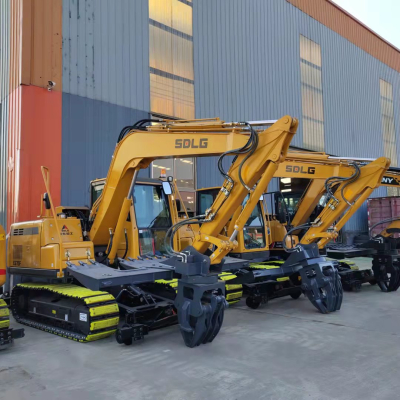
Discover the powerTiannuoRailway Spalpalizer. Thanks to the unique drive system for two wheels, which allows you to develop speeds of up to 15 km/h, it can quickly move along the paths, performing work on time. This is especially beneficial for projects with a dense schedule. The positioning mode, which protects against moving from rails using restrictive wheels on the chassis, is the most important aspect of safety. In the case of sudden irregularities of the path or unexpected movements, the machine remains stable. Compatible with a rut width 1435 and 1520 mm, it provides unsurpassed versatility. Regardless of whether you serve a railway with a standard track in a large city or a line with a wide range in a remote area, our product will cope with this task. If you want to improve the process of replacing the sleepers on the railway, this product is for you.ContactsTiannuo inraymiao@stnd-machinery.comNow take the first step to more efficient maintenance of railways. We will connect you with our experimental sales team that will help you in the process of choosing a product and offer individual solutions based on the specific requirements of your project.
Recommendations
Smith, J. (2023). Modern technologies for servicing railway tracks. Journal of Railway Engineering, 45 (3), 112-128.
International Union of Railways. (2022). Global standards for materials and installation of railway sleepers. A series of technical reports UIC.
Zhang, H. and Van, L. (2023). A comparative analysis of the characteristics of railway sleepers with large axial loads. Transportation Research Record, 2678 (5), 89-102.
European railway agency. (2024). Security Guide when replacing the components of the railway track. Technical ballot era.
Johnson, R. (2023). Achievements in the field of automated equipment for servicing railways: Technical review. Transport technology journal, 13 (2), 145-161.
About the author: ARM
ARM is a leading expert in the field of specialized equipment for the construction and maintenance of railways operating in Tiannuo Company. Tiannuo specializes in the production of a wide range of products, including equipment for servicing railways, such as machine -replacement machines and sorting machines, equipment for modifying excavators, such as lifting cabs of excavators, various engineering levers for excavators, accessories for excesses, and auxiliary equipment for engineering machines, such as buckets of loaders.