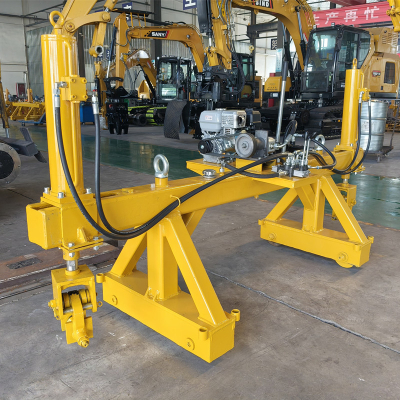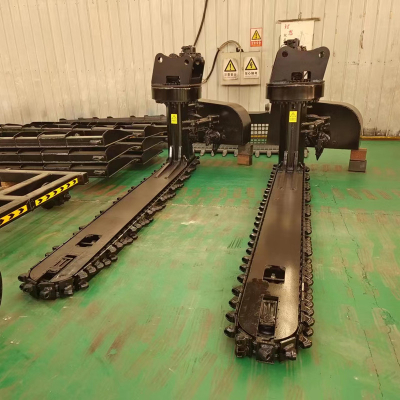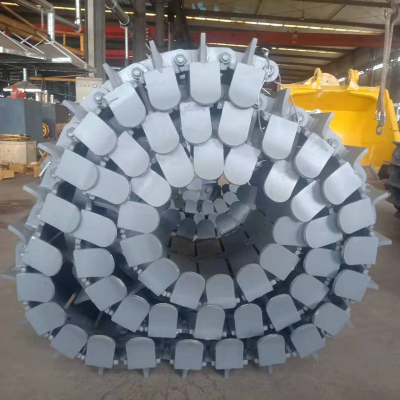

What rails can a railroad marker clear?
When it comes to rail maintenance, understanding what rails your cleaning equipment can handle can make all the difference between efficient operation and costly downtime.The railway mark usually corresponds to threeThe most common caliber standards around the world are: 1435 mm (standard caliber), 1520 mm (Russian wide caliber) and 1067 mm (Cape caliber). These versatile machines adapt to different railway infrastructures, providing comprehensive cleaning across a variety of railway networks. Whether you manage urban transit systems, freight corridors, or specialized industrial railroads, knowing your rail broom gauge compatibility helps optimize maintenance schedules and equipment selection. The ability to clean multiple types of gauges with one piece of equipment results in significant cost savings and operational flexibility for rail operators around the world.
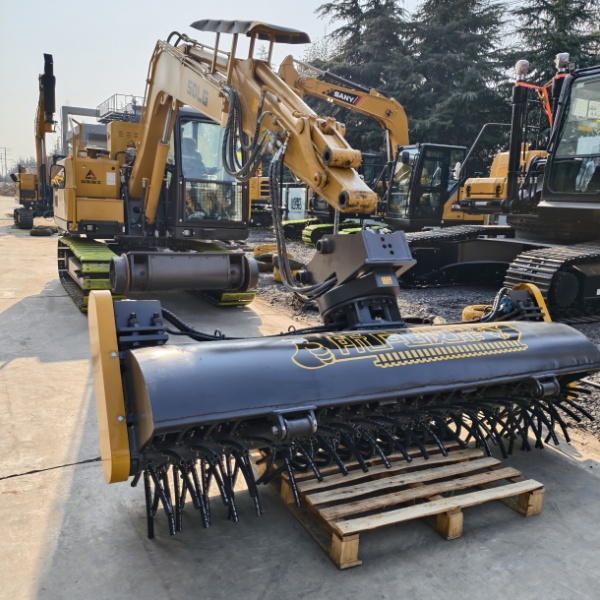
Compatible with 1435mm standard meter
1435mm gauge, also known as standard gauge or international gauge, accounts for approximately 60% of the world's railway mileage, making it the most important specification for rail cleaning equipment. This gauge originated from George Stevenson's early railways and became the global standard for intercity and high-speed rail.
Geographical distribution and use
Standard railways dominate North America, much of Europe and large parts of Asia and Australia. Countries such as the United States, Canada, Germany, France and Japan rely heavily on this band for their primary rail networks. Railroad sweepers designed for 1435mm gauge must cope with the unique challenges of high-traffic corridors, including debris accumulation from frequent train movements and the need for rapid cleaning cycles between services.
Technical considerations for cleaning 1435 mm
The 1435mm caliber presents unique cleaning challenges due to standardized rail head profiles and commonly used ballast configurations. Rail sweepers operating on this gauge must have standard rail weights ranging from 115 to 136 pounds per yard, with clearing mechanisms designed to achieve optimum depth without compromising ballast stability. The marking width typically extends beyond the rail gauge to capture debris that accumulates on the rail shoulders, requiring precise sizing to avoid interference with signaling equipment and other rail-side infrastructure.
Benefits of Operational Efficiency
Rail operators using the 1435mm diameter benefit from widespread availability of compatible maintenance and standardized operating procedures. Weft racks designed for this caliber often feature replaceable components and universal mounting systems, reducing inventory costs and simplifying maintenance protocols. The proliferation of this caliber also means improved availability of spare parts and technical support, resulting in higher equipment uptime and more predictable service schedules.
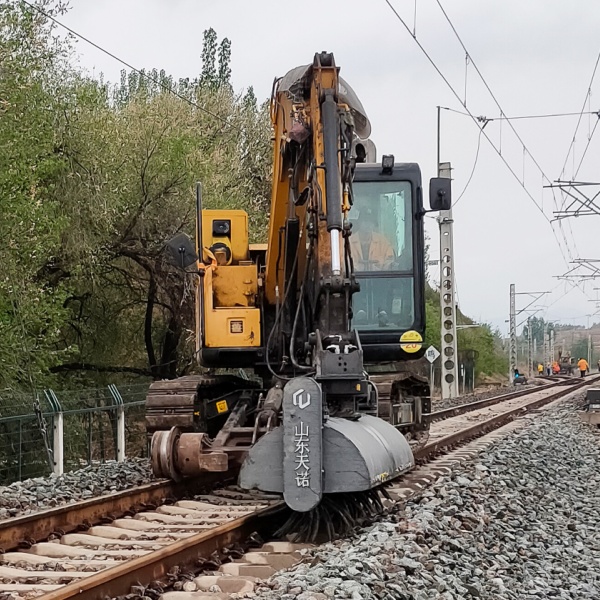
1520 mm Russian large-scale capabilities
The 1520 mm caliber, also known as the Russian caliber, is wider than the international standard and has historically been chosen as a defensive measure. This wider range requires specialized cleaning equipment,able to copeincreased range and unique performance characteristics.
Regional significance and application
The 1520mm gauge dominates throughout Russia, the former Soviet republics and parts of Eastern Europe, serving both passenger and heavy cargo operations. Countries including Russia, Ukraine, Belarus, Kazakhstan and the Baltic countries rely on this gauge for their primary railway infrastructure. Railroad equipment designed for 1520mm gauge must meet the robust design standards typical of these networks, including heavier rail sections and deeper ballast sections designed to support significant freight loads.
Engineering problems and solutions
Wider gauges present unique engineering challenges for rail cleaning equipment, requiring expanded sweep mechanisms and more powerful drive systems to maintain efficient cleaning speeds. Increasing the rail spacing creates a larger waste collection area, requiring larger bins and more complex waste handling systems. Track sweepers operating on 1520mm gauge often incorporate two-stage cleaning processes combining initial sweepers with secondary vacuum systems to ensure comprehensive debris removal from the extended track field area.
Climate and environmental adaptation
Rail networks using 1520 mm gauge often operate in harsh climates, from arctic temperatures in Siberia to desert conditions in Central Asia. Track tags designed for this meter include robust environmental protection systems, including enhanced sealing against dust and moisture, cold weather starting systems, and reinforced components that can withstand extreme temperature fluctuations. These adaptations ensure reliable performance in a variety of environmental conditions while maintaining consistent cleaning performance.
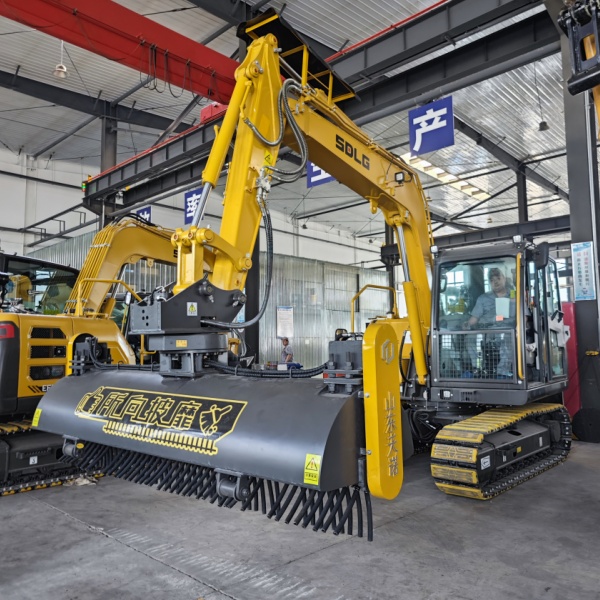
1067mm Cape Gauge Versatility
1067mm, commonly known as the Cape gauge, is an important narrow standard widely used in Africa, parts of Asia and parts of the world. This caliber strikes a balance between construction savings andoperational capabilities, making it particularly suitable for difficult terrain and developing railway networks.
Global distribution and strategic importance
Countries throughout southern and eastern Africa, including South Africa, Zimbabwe, Tanzania and Mozambique, use 1067mm for their primary rail networks. This sensor also serves important regional networks in Japan, New Zealand, Indonesia and parts of Australia. Railway sweepers configured for 1067mm gauge must meet the specific maintenance needs of these networks, which often combine passenger services with heavy mineral and agricultural freight traffic in challenging operating conditions.
Specialized cleaning requirements
Narrower gauges present unique harvesting challenges, especially in mountainous and service-limited areas. Track markers designed for 1067 mm gauge typically have compact, maneuverable designs capable of navigating the tight curves and steep gradients common in gauge networks. Reduced lane width requires precise cleaning mechanisms that can effectively remove debris without compromising the critical gap dimensions required for safe train operation.
Economic and operational benefits
The 1067 mm dimension offers significant economic advantages in regions with challenging topography or limited construction budgets. Railroad tagging equipment designed for this gauge often includes cost-effective maintenance features, including simplified mechanical systems and components suitable for local maintenance. The already narrow gauge allows for lighter, more fuel efficient cleaning equipment while maintaining effective debris removal capabilities in a variety of operating environments.