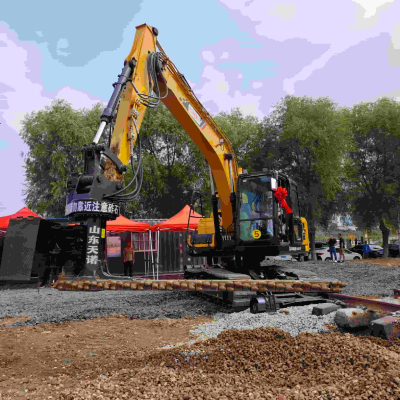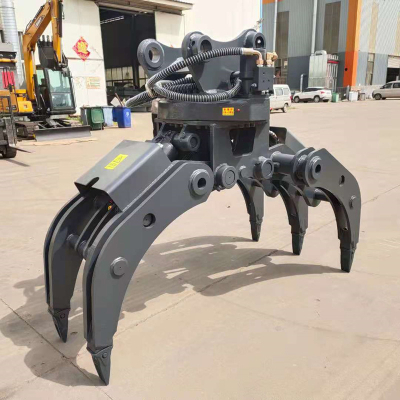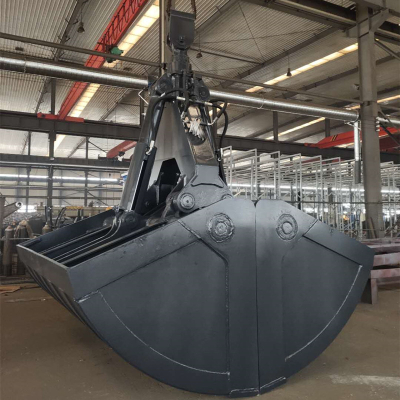

What is the compaction frequency of the double-head compactor unit of the railway excavator?
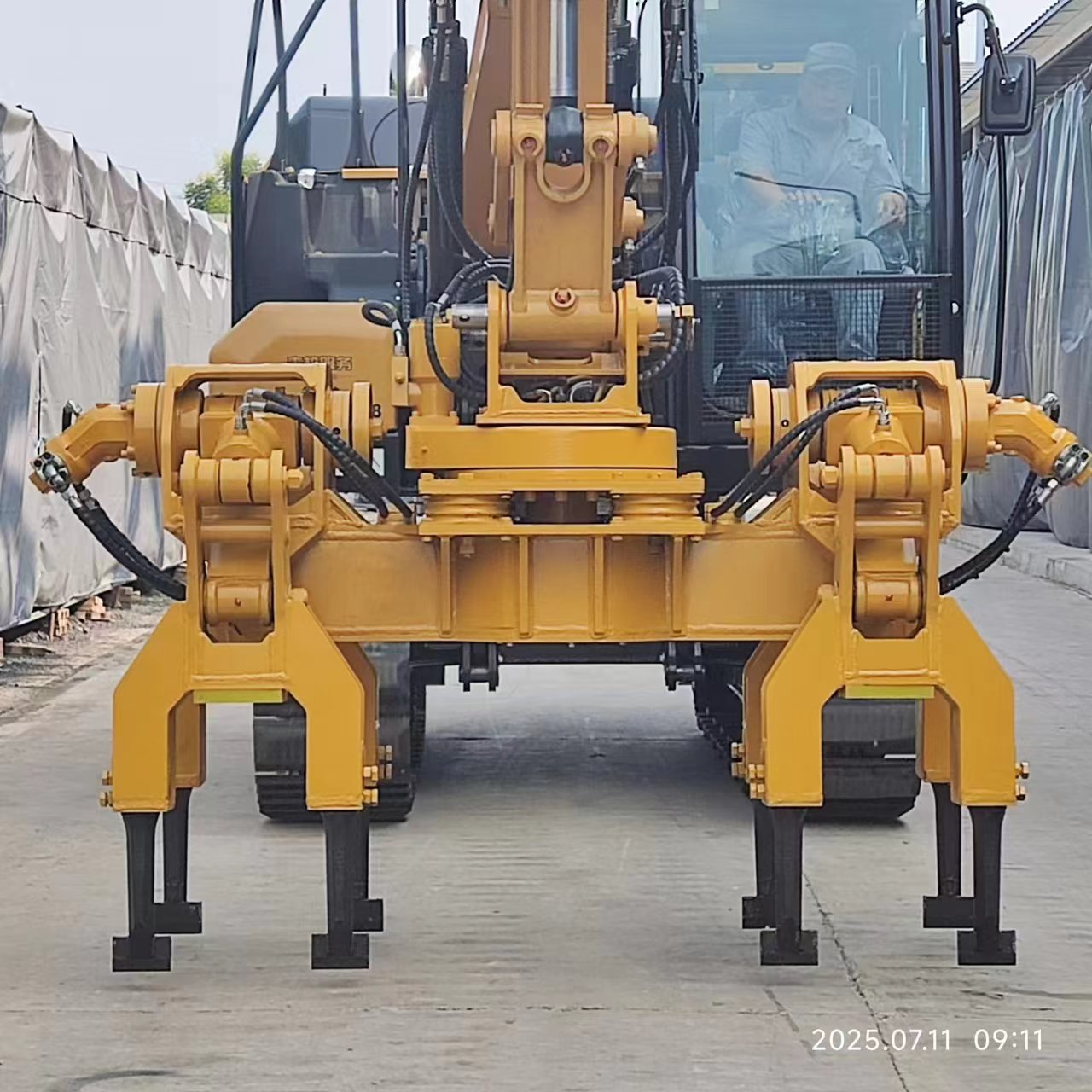
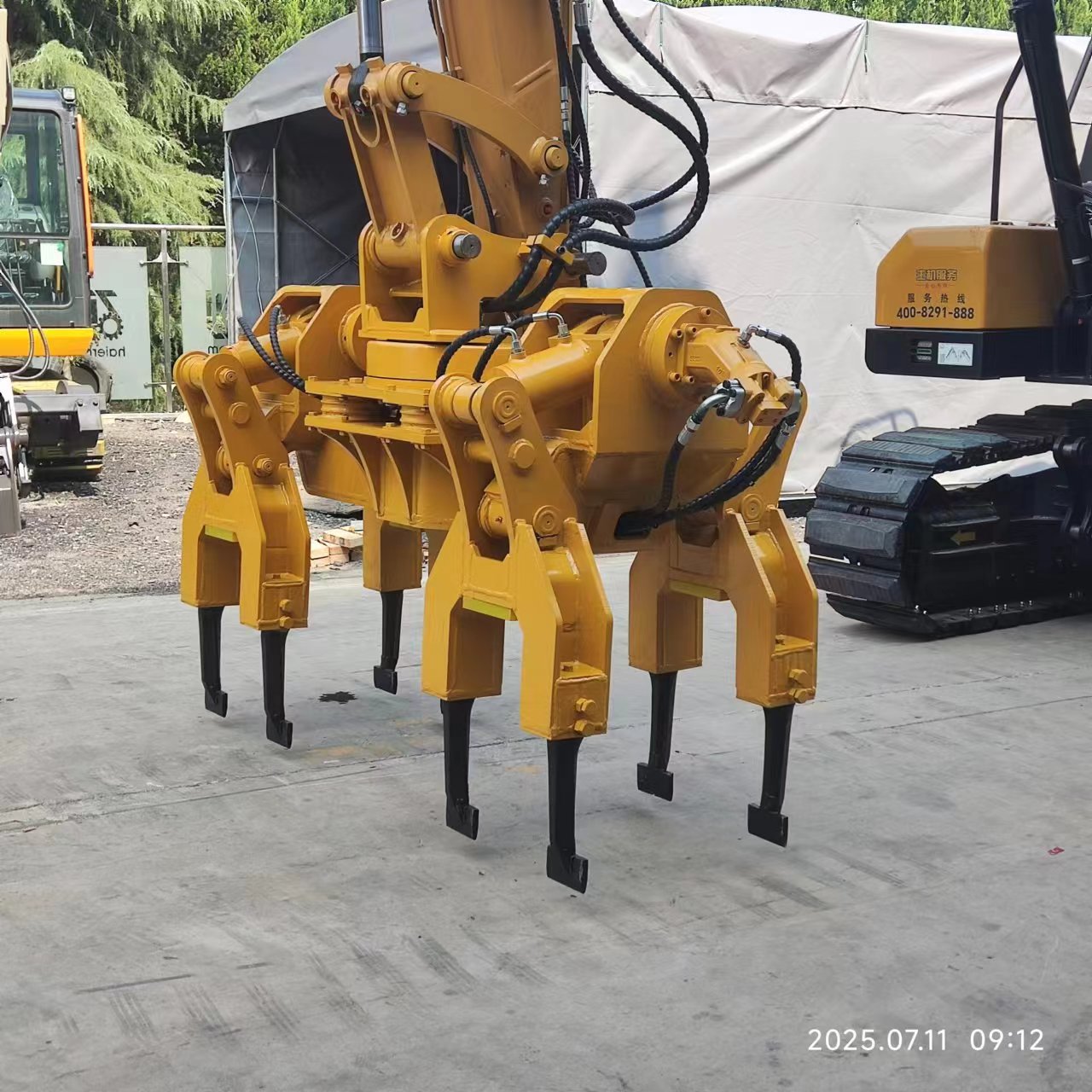
The compaction frequency of the high-quality dual-head compactor for boom excavators operates at the industry standard of 35 Hz, ensuring optimal ballast compaction and track stability. This precise frequencyguarantees maximumefficiency in railroad maintenance operations by allowing vibrating teeth to effectively penetrate the ballast bed while maintaining structural integrity. Modern railroad maintenance professionals rely on this particular frequency range because it represents the optimal point where ballast rocks begin to move and rearrange into a denser, more stable configuration. The 35 Hz frequency has been scientifically proven through extensive field testing and represents decades of engineering improvements in railroad maintenance technology. Understanding this critical parameter helps maintenance crews select equipment that provides consistent and reliable performance under a variety of track conditions and maintenance scenarios.
Industry Standards
Soviet railroad maintenance operations around the world converge on certain standard frequencies that maximize laying efficiency while maintaining equipment longevity. The established industry benchmark of 35 Hz is more than just a technical specification—it represents years of research, field testing, and practical application in various rail systems around the world.
International regulatory framework
Global railway authorities have established comprehensive guidelines governing the specifications of compaction machines,moreover, the requirementsto frequency are the basis of these standards. European rail networks, North American systems and high-speed rail operators in Asia recognize 35 Hz as the optimal operating parameter for ballast compaction operations. This universal acceptance is due to the results of extensive collaborative research between manufacturers, railway operators and maintenance specialists, who have jointly proven the effectiveness of this frequency in a variety of climates, track geometries and operating environments.
Technical Specificationsfor Interoperability (TCO) regulations governing trans-European railway systems specifically address frequency requirements for equipment maintenance to ensure cross-border compatibility and operational efficiency. These standards facilitate equipment interoperability between different rail networks, allowing maintenance crews to deploy high-quality double-head rail shovels in multiple jurisdictions without modification or recalibration.
Engineering physics behind the choice of frequencies
The 35 Hz frequency represents a carefully calculated balance between ballast liquefaction and structure preservation. At this frequency, ballast stones experience optimal displacement while maintaining their load-bearing characteristics. Lower frequencies are unable to provide adequate ballast movement, while higher frequencies can cause excessive wear on both the blasting equipment and the ballast itself.
Vibration mechanics shows that 35 Hz creates resonant conditions in standard railway ballast compositions, allowing stones to redistribute into more compact configurations without compromising their drainage properties. This frequency also minimizes energy consumption, maximizing blasting efficiency, promoting operational efficiency and long equipment life.
Quality Assurance Protocols
Professional railroad maintenance organizations use rigorous testing protocols to verify the accuracy and consistency of removal frequencies. These quality assurance measures ensure that the equipment maintains an accurate output frequency over long periods of operation, preventing frequency drift that could compromise maintenance efficiency.
Calibration procedures typically involve periodic frequency verification using specialized measurement equipment, with acceptable tolerance ranges typically maintained within ±2 Hz of the target frequency. This accuracy ensures consistent performance across a variety of operating scenarios and environmental conditions.
Performance check
A comprehensive performance test demonstrates how a 35 Hz tuning frequency delivers superior results compared to alternative frequency ranges. Field tests on several railway systems consistently show that this frequency ensures optimal ballast consolidation while minimizing equipment stress and operating costs.
Ballast consolidation efficiency
Laboratory and field studies consistently show that a frequency of 35 Hz achieves maximum improvement in ballast density with minimal energy input. Studies conducted on various ballast compositions show that this frequency creates optimal vibration patterns that stimulate stone redistribution without causing excessive fragmentation or dust formation.
Measurement data show that operations with 35 Hz removal typically achieve 15-20% higher ballast density compared to operations at alternative frequencies. This improved consolidation directly results in increased track stability, shorter maintenance intervals, and improved overall track performance.
Operational performance metrics
Performance validation goes beyond ballast consolidation to broader operational efficiency considerations. Equipment operating at the optimal 35 Hz frequency exhibits reduced energy consumption, reduced wear, and improved service intervals compared to machines operating at suboptimal frequencies.
Field data collected during extensive maintenance operations shows that machines operating at 35 Hz complete consolidation tasks approximately 12% faster than equipment operating at alternative frequencies. These efficiency gains directly impact project timelines and operating costs, providing tangible benefits to railroad maintenance organizations.
Long-termtrack performance
Extended monitoring of trace sections supported by 35Hz loading hardware shows superior long-term performance characteristics. These sections exhibit reduced settlement rates, improved geometry retention, and longer intervals between maintenance interventions compared to sections maintained with multi-frequency equipment.
Statistical analysis of railroad performance data spanning multiple years shows that sections maintained by properly calibrated dual 35 Hz railroad shovel head machines exhibit 25-30% longer service intervals, resulting in significant cost savings and improved operational reliability.
Competitive differentiation
Understanding how the 35Hz frequency specification differentiates premium equipment from standard alternatives helps maintenance professionals make informed equipment selection decisions. This frequency is a key performance indicator that separates professional-grade equipment from mainstream alternatives.
Advanced frequency control systems
The machine's premium components include sophisticated frequency control systems that maintain precise 35Hz operation regardless of operating conditions. These systems use electronic feedback mechanisms and hydraulic control systems that automatically adjust to maintain optimal output frequency under varying loads and environmental conditions.
Standard equipment is often notenough of thislevel of frequency accuracy, resulting in performance variations that can undermine service efficiency. The ability to maintain a consistent output frequency represents a significant competitive advantage that justifies the investment in premium hardware.
Advantages of a dual-head configuration
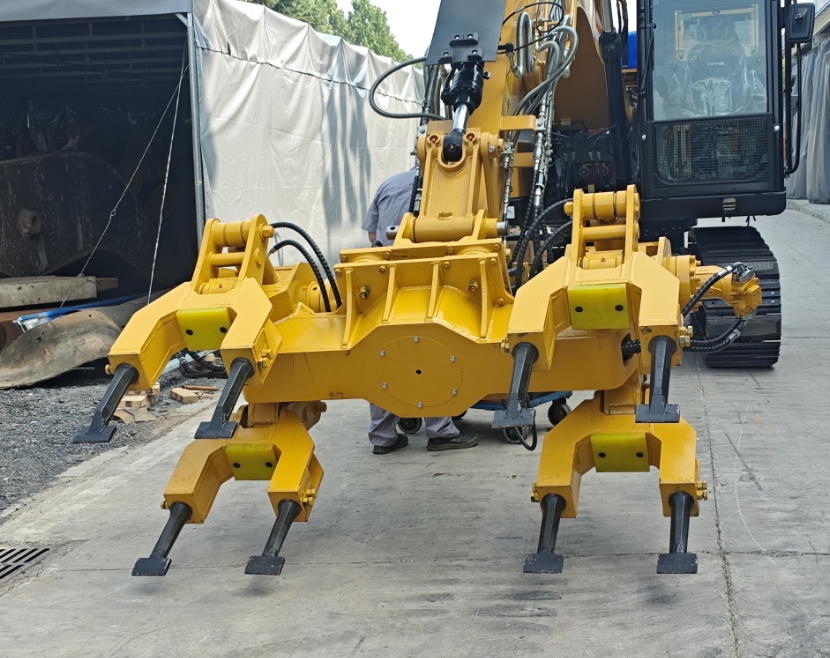
The dual-head configuration of premium ballast machines multiplies the efficiency of the 35 Hz frequency, ensuring synchronized ballast operation on both sides of the track simultaneously. This configuration ensures uniform ballast consolidation across the entire lane width, eliminating uneven settlement patterns that can occur with single-head systems.
Synchronized dual-head operation at 35 Hz creates additional vibration patterns that enhance ballast liquefaction while maintaining structural integrity. This sophisticated approach to blasting represents a significant advance over traditional single-head systems and demonstrates the evolution of railway maintenance technology.
Integration with modern railway systems
Modern railway maintenance strategies increasingly emphasize predictive maintenance and condition-based interventions. Premium equipment operating on standardized frequencies integrates seamlessly with modern railway management systems, enabling data-driven maintenance decisions and optimized resource allocation.
The constant 35 Hz frequency output enables standardized performance and predictable maintenance results, supporting the implementation of advanced maintenance strategies that reduce costs while increasing reliability.