
What size is a standard bucket?
When it comes to excavation equipment, one of the most common questions asked by industry professionals is: "What size is a standard bucket?" The truth is, there is no single answer.Excavator bucket sizes vary considerably depending on the machine they are paired with and the specific application requirements.Standard bucket sizes typically range from 0.1 to 5.0 cubic meters per capacity, with widths ranging from 500mm to 2000mm. The "standard" size for any given excavator depends primarily on the machine's operating weight and intended use.For example, a 20-ton excavator will typically use a bucket with a capacity of approximately 1.0 cubic meter, while smaller 5-ton machines might use a bucket with a capacity of 0.3 cubic meter.Understanding these differences is critical to optimizing productivity and efficiency in construction, rail maintenance, mining and other heavy-duty applications.
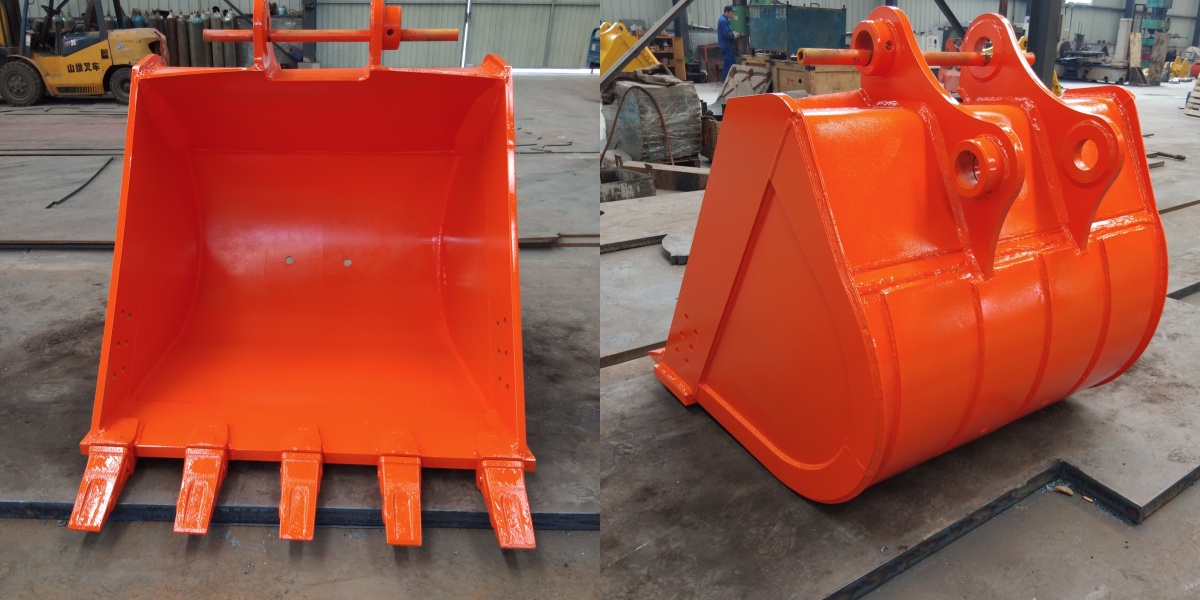
Capacity (basic parameters)
Measuring the capacity of a bucket
An excavator's bucket capacity is one of its most important specifications. Measured in cubic meters or cubic yards, capacity indicates the maximum volume of material the bucket can hold in a single load. This measurement directly impacts productivity and efficiency on the job site.
When discussing bucket capacity, it is important to distinguish between two main measurements:
Accumulated capacity refers to the total volume when the material accumulates above the bucket's rim at its natural resting angle. This is typically the capacity figure advertised by most manufacturers, as it represents the actual lifting capacity.
Impact power measures only the volume contained within the bucket's shell when filled to the brim. This measurement is more conservative, but it provides a basis for comparison.
For railway construction and maintenance, selecting the appropriate bucket capacity balances efficiency with precision. A bucket that's too large can compromise precision in tight spaces, while a bucket that's too small reduces productivity and increases cycle times.
Excavator Bucket Size Chart
Bucket capacity closely correlates with the size and power of the excavator. Industry standards are developed around typical pairs:
Mini excavators (1-6 tons): 0.1-0.3 cubic meters
Small excavators (7-10 tons): 0.25-0.6 cubic meters
Medium excavators (11-25 tons): 0.5-1.5 cubic meters
Large excavators (26-40 tons): 1.0-2.5 cubic meters
Heavy excavators (40+ tons): 2.0-5.0 cubic meters
These ranges serve as starting points, although specific applications may require deviations from these standards. For example, mining operations often use larger buckets to maximize material flow, while precision demolition work may require smaller buckets with greater control.
Optimizing power for specific applications
The optimal bucket capacity varies significantly depending on the specific task and material being processed. Different industries have developed specialized capacity requirements:
For railway maintenance work, medium-sized buckets (0.5-1.2 cubic meters) provide the necessary balance between power and precision for tasks such as ballast cleaning and rail bed preparation.
Construction companies typically prefer versatile capacities between 0.8 and 2.0 cubic meters for general excavation, providing efficiency without overloading the machine's hydraulics.
Mining operations often strive for maximum capacity (3.0-5.0 cubic meters) to optimize material flow and reduce cycle times in high volume mining scenarios.
Landscape and forestry applications typically use lower capacities (0.2-0.6 cubic meters) for detailed work and compatibility with smaller machines that minimize ground disturbance.
The density of the material also plays a crucial role in choosing a container. Dense materials, such as wet clay or rock, require smaller buckets to prevent overloading, while lighter materials, such as dry soil or sand, allow for larger capacity.
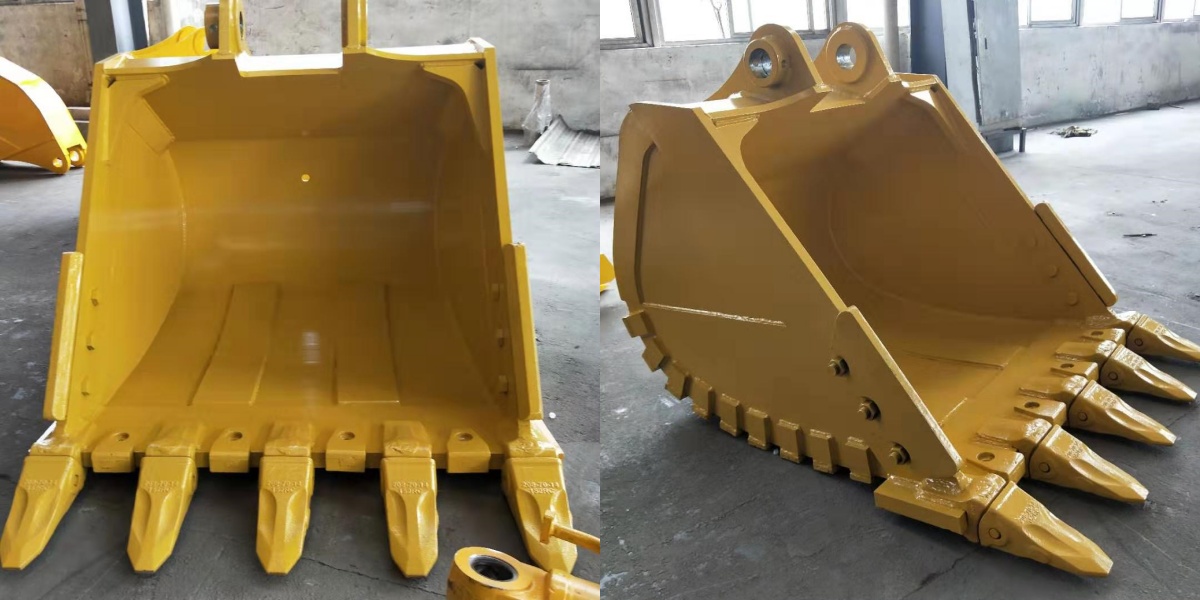
Geometric dimensions (typical parameters)
Width Specifications and Standards
An excavator's bucket width is a fundamental dimension that significantly impacts its functionality and suitability for use. Standard bucket widths typically range from 500 mm to 2000 mm, with the most common sizes being 600 mm to 1200 mm for medium-sized excavators.
The choice of width depends primarily on three factors:
Trench Requirements: Utility trenches often require precise width specifications to accommodate pipes or cables. Common trench widths include 450 mm, 600 mm, and 900 mm.
Stability considerations: Wide buckets distribute the force over a larger area, reducing ground pressure but potentially reducing digging force. Narrower buckets concentrate the force, increasing penetration into hard materials.
Machine compatibility: The bucket width should generally not exceed the width of the excavator rails or wheels to maintain stability and prevent damage to surrounding structures.
For railway maintenance equipment, standard bucket widths often match rail gauge specifications, with specialized buckets ranging from 800mm to 1435mm to meet standard gauge requirements.
Depth and height dimensions
In addition to the width, bucket depth and height, the following measurements significantly affect performance characteristics:
Bucket depth (measured front to back) typically ranges from 800 mm to 1500 mm for standard buckets. Deeper buckets increase capacity but may reduce maneuverability in tight spaces.
Bucket height (measured from the cutting edge to the top of the backplate) typically ranges from 500 mm to 1200 mm. Taller buckets provide greater capacity but can limit visibility and increase material containment issues.
The relationship between these dimensions creates different bucket profiles suitable for specific tasks:
Deep, narrow buckets excel at trenching and precision excavation. Wide, shallow buckets work well for classifying, leveling, and spreading material. Balanced dimensions provide versatility for general excavation tasks.
Standard geometric ratios have emerged in the industry, with typical depth-to-width ratios around 1.2:1 for general purpose buckets and 1.5:1 for deep digging.
Attachment point measurements
The connection between the excavator bucket and the machine arm is another critical dimension. These attachment points must meet standardized specifications to ensure compatibility:
Pin diameter specifications typically range from 30mm to 100mm, increasing with machine size.
The stud-to-stud distance (measured center-to-center between mounting points) varies from 300mm to 800mm depending on the excavator class.
The link arm geometry must be matched to the machine design to maintain correct bucket angles throughout the digging cycle.
These attachment dimensions follow standardized patterns based on the machine's mass class, although proprietary systems exist among various manufacturers. Universal quick-connectors have grown in popularity, allowing operators to quickly switch between bucket types while maintaining consistent attachment dimensions.
For specialized applications such as demolition or railway maintenance, reinforced anchor points with large pin diameters provide additional durability in high-stress environments.
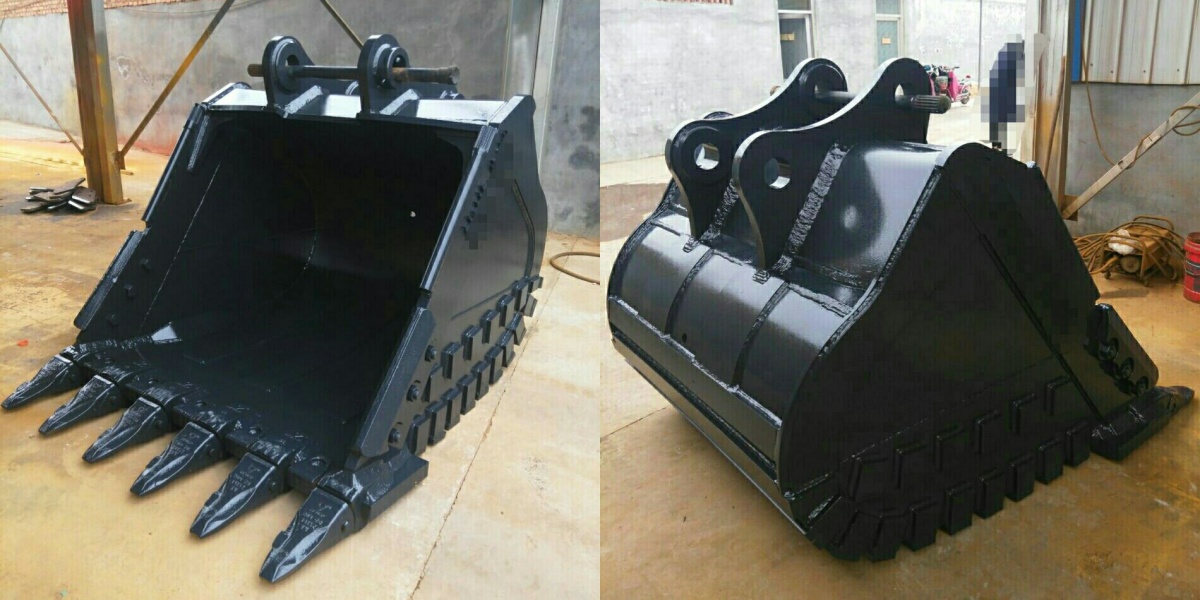
Factors Affecting Size
Machine size and power correlation
The size and power of the excavator directly impact the corresponding bucket dimensions. This relationship follows a fundamental principle of mechanical engineering: the machine must have sufficient hydraulic power, stability, and counterweight to effectively operate the bucket throughout its entire range of motion.
There are several key correlations:
Operating weight ratio: As a general rule, the bucket weight should not exceed 8-10% of the excavator's operating weight for optimal performance. Exceeding this ratio can strain the hydraulic systems and compromise stability.
Hydraulic Pressure Limits: Each machine has a maximum hydraulic pressure capability, which determines the force available for bucket operations. Large buckets may exceed these limits, resulting in reduced performance and potential damage.
Lifting Limitations: The design of the excavator boom and arm determines maximum lifting capacity at various distances. The bucket size must meet these specifications to prevent tilting or structural stress.
Industry standards are developed around these relationships, and manufacturers typically provide detailed compatibility charts for their equipment. For example, a 20-ton excavator typically handles buckets of 0.8 to 1.2 cubic meters, while a 30-ton machine can effectively handle buckets of 1.5 to 2.0 cubic meters.
Material density considerations
The density of the excavated material significantly influences the choice of bucket size. Denser materials require smaller buckets to prevent overloading and maintain operational efficiency.
Common material densities and their effect on bucket size:
Loose soil/sand (1400-1600 kg/m³): may allow the use of larger buckets approaching the machine's maximum capacity.
Mixed soil/clay (1700-2000 kg/m³): Typically requires reduction to 80-90% of maximum bucket capacity.
Rock/compacted materials (2200+ kg/m³): often require buckets at 60-75% of maximum capacity.
These density adjustments ensure the excavator operates within its design parameters while maintaining productivity. For railway construction and maintenance applications, where ballast materials are typically handled (typically 1800-2000 kg/m³), medium-capacity buckets provide the optimal balance.
Specialized bucket designs address density issues with features such as:
Reinforced plates for abrasive materials
Spill guards for loose, flowing materials
Rock rippers for dense, compressed surfaces
Skeleton buckets that allow penalties to be passed through while maintaining larger objects
Specific changes
In addition to standard sizes, bucket designs often include modifications tailored to specific applications and industries:
For railway maintenance, specialized buckets:
Angle edges for ballast profiling
Already narrow widths for work between tracks
Reinforced structures for handling heavy railway components
Specialized tooth patterns for ballast penetration
In construction applications:
Smooth edged classification buckets for finishing work
V-shaped ditch buckets for drainage applications
Trapezoidal buckets for slope cutting
Tilt buckets for working on uneven surfaces
Extraction and demolition require:
Heavy duty reinforcement for rock handling
Extremely thick wear plates and cutting edges
Specialized tooth configurations for material penetration
Rock guards for hydraulic components protection
These modifications often alter standard dimensions to optimize performance in specific contexts. For example, a standard 1.0 cubic meter bucket can be modified to 0.8 cubic meters with reinforced sides for handling rocks or expanded to 1.2 cubic meters with extended side plates for handling lightweight materials.
The relationship between standard sizes and specific modifications highlights the importance of consulting with specialists when selecting an excavator bucket for specialized applications such as railway maintenance or construction in difficult conditions.