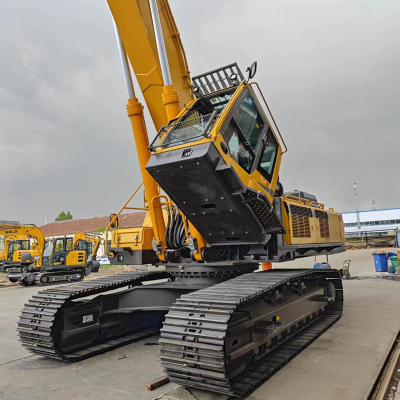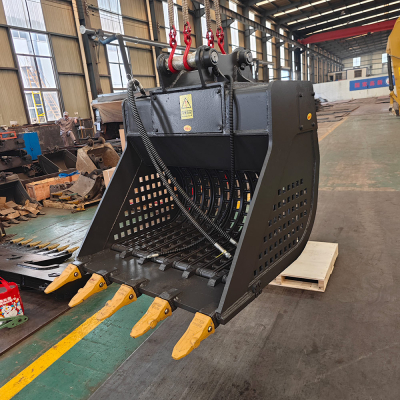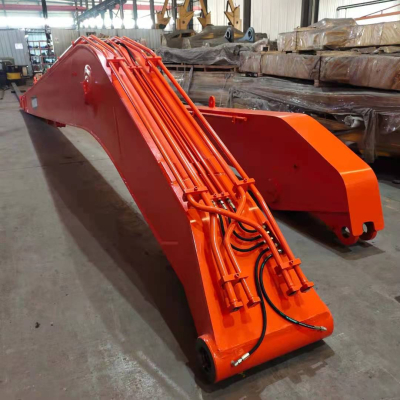

What types of stacks is the excavator stack boom applied to?
Versatilityexcavator boomgoes far beyond simple digging operations, covering a remarkable range of heap installation and retrieval in a variety of construction scenarios. Modern stack booms have revolutionized foundation work by placing numerous types of stacks, each meeting specific structural and environmental requirements. Understanding which types of stacks work best with excavator stack systems becomes critical for construction professionals seeking optimal project results.
The stacking jet demonstrates exceptional compatibility with concrete piles, steel piles and a variety of specialized pile configurations designed for unique construction applications. These versatile machines can process steel sheet piles, cement piles, steel rail columns, H-beam steel piles, wood piles and steel pipes, making them essential tools for modern construction projects. The adaptability of overhead booms allows construction teams to tackle everything from highway foundations to marine structures, delivering reliable performance in challenging applications while maintaining the accuracy and efficiency that modern construction schedules demand.
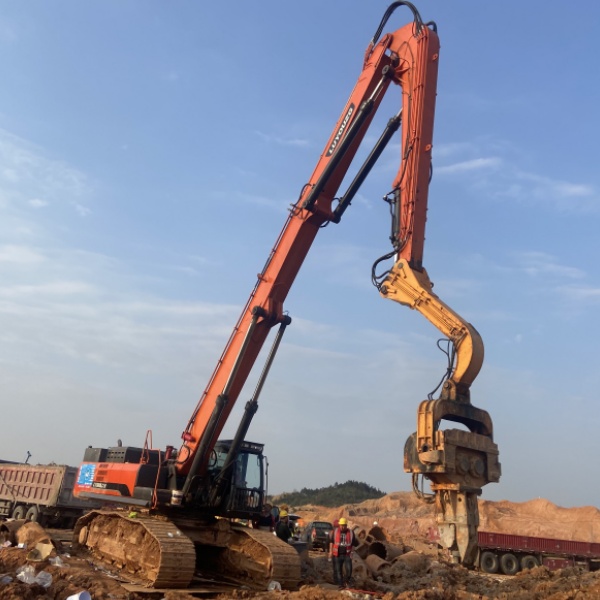
Concrete stacks
Concrete landfills represent one of the most common applications for excavators, offering exceptional load-bearing capacity and long-term durability, making them ideal for large construction projects. The compatibility between column booms and concrete column systems has changed the way construction teams approach fundamental work in challenging soil conditions.
Fabricated concrete stacks
The manufactured concrete dumps exhibit durable characteristics and dimensional consistency, making them particularly suitable for excavator operation. These piles arrive on job sites fully anchored and ready to install, eliminating the waiting periods associated with cast alternatives. Standardized dimensions and reinforcement patterns of precast stacks provide predictable handling characteristics that optimize stack performance.
The installation process involves precise positioning and controlled steering to ensure superior storm performance. Modern boom booms provide the hydraulic power and volume needed to handle precast concrete booms, ranging from small residential applications to large infrastructure projects. The ability to maintain consistent drive energy while adapting to varying soil conditions makes these systems especially valuable for projects requiring uniform stack performance.
Concrete stacks in place
Cast-in-place concrete landfills present unique opportunities for excavators, especially in situations where custom landfill dimensions or specialized concrete mixes are required. The flexibility of these systems allows construction teams to adapt to specific site conditions while maintaining structural integrity throughout the installation process.
The ability of a backhoe boom to accurately control drilling depth and maintain vertical alignment proves essential to the success of a field-cast boom. These operations require careful coordination between drilling, placing steel reinforcement, and pouring concrete, all of which benefit from the stability and precision that modern booms provide. Hydraulic systems in modern booms provide the constant power needed for continuous drilling operations in a variety of soil conditions.
Continuous flight Auger Piles
Continuous Flight Auger (CFA) stakes are an advanced concrete stake technology that utilizes the precise capabilities of excavators to achieve superior installation results. This method of accumulation involves the installation of a temporary housing by the accumulation plant to provide support during the installation process, requiring the complex control systems that modern accumulation booms offer.
The CFA installation process requires precise coordination between screw advancement, concrete pumping and reinforcement insertion.Excavator driftsProvide the hydraulic power and control necessary to maintain consistent screw rotation while monitoring penetration resistance. This capability ensures proper concrete placement while minimizing soil disturbance, making CFA piles particularly valuable for projects in environmentally sensitive areas or near existing structures.
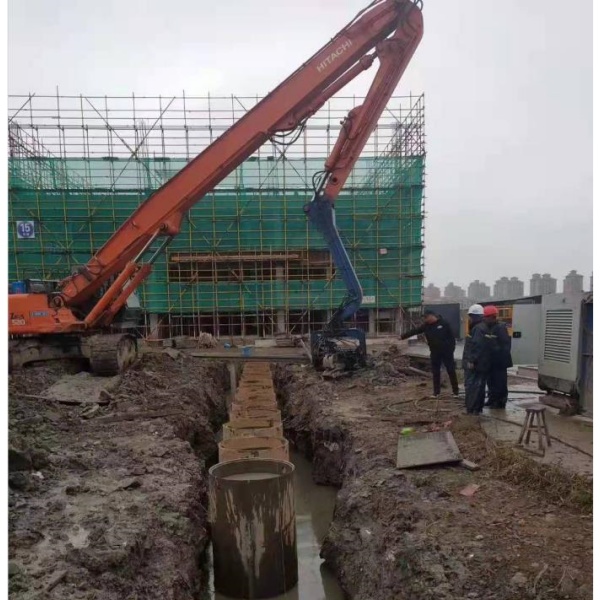
Steel stacks
Steel dumps offer exceptional versatility and performance characteristics that perfectly match the capabilities of modern excavators. The strength and durability of steel dump systems make them ideal for demanding construction applications where reliability and durability are paramount.
H-Beam steel steles
H-section are steel beams that are driven into the ground by machines, providing excellent driving performance when driving in difficult soil and rock conditions. These structural steel beams provide superior load-bearing capacity while maintaining relatively lightweight characteristics that optimize storage performance.
The H-bundle cross-section design provides exceptional resistance to bending and bending forces encountered during installation. Excavators equipped with appropriate drive attachments can effectively install these landfills in a variety of soil conditions, from soft clay to dense gravel deposits. The ability to achieve precise alignment and controlled drive energy makes accumulative booms especiallyeffective forH-beam installations where structural integrity is critical.
Modern H-beam installations take advantage of the advanced hydraulic systems found in modern booms. These systems provide consistent drive energy while controlling stack penetration resistance, ensuring optimal installation quality. The versatility of H-boom stacks makes them suitable for applications ranging from highway bridge foundations to high-rise building supports, all of which benefit from the precise control that excavator stack booms provide.
Steel sheet stacks
Steel sheet dumps represent one of the most versatile applications for excavators, offering solutions for retention walls, cassette dams and environmental retention systems. Sheet stacks serve several purposes, including separating foundations from lateral soil, stopping groundwater movement, and preventing vibrations from reaching lateral structures.
The interlocking design of steel sheet stacks requires precise installation techniques that uniquely equipped stack booms provide. These systems must maintain perfect alignment while achieving the required penetration depth to ensure watertight seals. Hydraulic control systems in modern booms allow operators to continuously adjust travel parameters to account for changes in ground conditions while maintaining boom integrity.
Sheet stack installations often involve complex geometric configurations that require exceptional positioning accuracy. Excavator pieces excel in these applications, providing the reach and precision needed to fit pieces into tight spaces while maintaining required tolerances. The ability to remove and reinstall leaf stacks makes these systems especially valuablefor temporaryapplications such as construction dewatering or emergency flood protection.
Steel pipes
Steel pipe dumps combine the structural advantages of steel with the versatility of hollow sections, creating opportunities for specialized applications that take advantage of the dumping capabilities of an excavator. These systems can be operated in either open or closed configurations, depending on specific project requirements and soil conditions.
Specialized stacks for specific scenarios
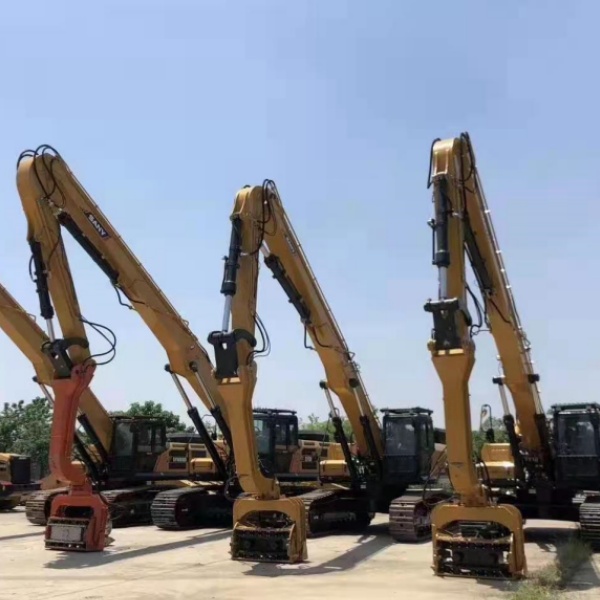
Beyond the typical applications of concrete and steel mortars, excavator mortars demonstrate remarkable adaptability to specialized mortar types designed for unique construction challenges. These specialized applications often require customized approaches that utilize the versatility and precision of modern mortar equipment.
Composite and hybrid systems
Composite systems combine different materials to optimize performance characteristics for specific applications. These innovative designs can incorporate steel sections for high-stress areas with concrete elements for cost-effective load distribution. Excavator stack booms provide the flexibility needed to handle these complex installations while maintainingthis accuracynecessary for proper integration of components.
Installing composite landfills often requires sequential operations that take advantage of the landfills' multifunctional capabilities. These systems can accommodate different types of fixtures, allowing operators to switch between drilling, driving and positioning functions without changing equipment. This versatility proves especially valuable for projects involving multiple stack types or complex installation sequences.
Hybrid stack systems are an advanced foundation technology that pushes the boundaries of conventional stack construction. These systems may include advanced materials such as fiber-reinforced polymers or specialized steel alloys that require careful handling during installation. Precise control systems in modern excavators ensure that these advanced materials are installed to manufacturer specifications while maintaining structural integrity.
Environmental and marine applications
Specialized applications inenvironmental and marineconditions create unique challenges that require booms to be adaptable. These applications often involve corrosive environments, restricted access areas, or sensitive environmental areas that require specialized installation techniques.
Offshore installations require equipment that can handle challenging conditions while maintaining accurate positioning and alignment. Excavated column booms, mounted on specialized platforms or vessels, provide the stability and control needed for successful offshore column installations. The ability to adjust operational parameters in real time is critical to account for tidal changes and weather conditions.
Environmental applications often involve stack installations in contaminated soil or sensitive environmental areas where minimizing disturbance is paramount. The precise control offered by excavators allows for careful installation methods that reduce environmental impact while maintaining design performance. These applications may include specialized materials or coatings designed to prevent migration of contamination or protect against harsh soil conditions.